
A bridle range can look complete on a showroom wall and still perform poorly at retail. Too many near-identical designs create slow stock, while missing sizes, unsuitable nosebands or the wrong color mix leave buyers without the product their customers actually need.
For importers, wholesalers and private-label brands, choosing between the main types of horse bridles is a range-planning decision. Discipline, market, sizing, leather, hardware, reins and competition expectations all affect which models deserve a place in the collection. This guide explains those differences from a commercial sourcing perspective.
What Counts as a Bridle Type?
Buyers often use “bridle type,” “noseband type” and “bit type” as if they mean the same thing. They do not.
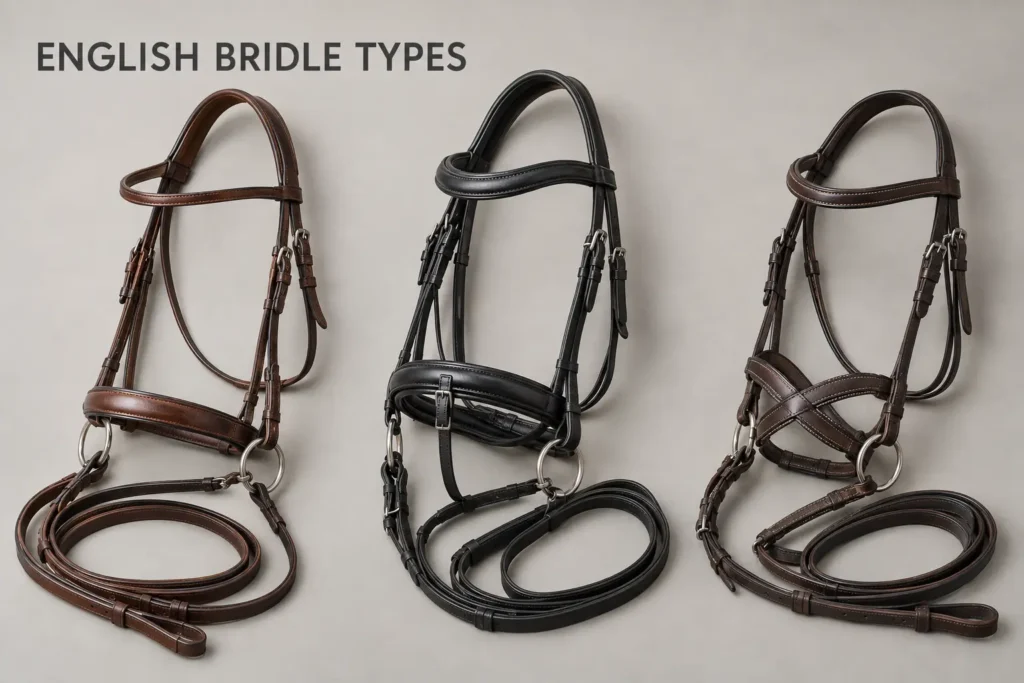
A bridle is the complete headgear assembly. Its core parts can include the headpiece or crownpiece, browband, cheekpieces, noseband, throatlatch and reins. A snaffle or double bridle describes the main configuration. Cavesson, flash and figure-eight usually describe the noseband. Anatomical describes shaping intended to change pressure distribution or clearance. The bit is normally specified separately.
Separating these choices produces clearer quotations and cleaner SKU data.
| Product family | Defining configuration | Common market position | Main buyer decision |
|---|---|---|---|
| Snaffle bridle | One bit and one set of reins | Schooling, general English riding and many competition ranges | Core leather, noseband and rein options |
| Dressage bridle | Discipline styling in snaffle or double configuration | Dressage-focused collections | Black or brown, padding, browband and noseband style |
| Double bridle | Two bits and two sets of reins | Advanced dressage and specialist showing | Precise strap layout and matching reins |
| Hunter or show bridle | Traditional, refined leather presentation | Strong in the USA and UK show markets | Leather color, raised details and conservative hardware |
| Figure-eight bridle | Crossed or grackle-style noseband | Jumping and eventing collections | Noseband shape, padding and discipline rules |
| Anatomical bridle | Contoured headpiece and other shaped components | Premium comfort-led segment | Genuine design function, fit and size grading |
| Bitless bridle | Control system without a bit | Leisure, training and specialist markets | Action type, labeling and permitted use |
| Western headstall | Browband, one-ear or two-ear Western configuration | Western riding, especially in the USA | Leather weight, tooling, hardware and matching reins |
The Main Types of Horse Bridles for Wholesale Ranges
Snaffle Bridles: The Broadest English Category
The snaffle bridle is the most versatile starting point for an English tack collection. It typically carries one bit and one set of reins, although “snaffle” should not be treated as a complete bit specification. Useful wholesale variations come from the noseband, padding and finish. A plain cavesson offers a traditional option; raised leather, contrast stitching or a shaped browband can support a higher price tier.
Dressage Bridles: Discipline-Specific Presentation
Dressage bridles are commonly black, though brown also has a market. Buyers often request refined straps, padded crownpieces, decorative browbands and cavesson, flash or crank-style nosebands. Because a dressage bridle may be a snaffle or double, specify the cheekpieces, reins, bit hangers, buckles and exact noseband construction. Verify current local rules before advertising competition legality.
Double Bridles: A Specialist Technical SKU
A double bridle accommodates a bradoon and curb bit with two sets of reins. It needs careful grading because small errors in strap length or buckle position become obvious when two bits must sit together. This is normally a specialist SKU for established dressage or showing customers.
Hunter and Show Bridles: Traditional Details Matter
Hunter and show buyers often expect quality brown leather, neat raised sections, conservative stitching and proportionate hardware. This category is particularly relevant in the USA and also suits selected UK showing ranges. Approve color carefully because “havanna,” “chestnut” and “dark brown” are not identical supplier standards.
Figure-Eight or Grackle Bridles
The crossed noseband makes this style visually distinct and commercially relevant to jumping and eventing ranges. Buyers should specify the position and shape of the central pad, ring material, strap width, padding and adjustment range.
Names vary by region. “Figure-eight” is common in North America, while “grackle” is widely used in the UK and Europe. Using both terms naturally in product copy improves clarity without creating duplicate products.
Bitless Bridles
Bitless is not one universal construction. Side-pull, cross-under and hackamore-style systems act differently and require separate specifications. Demand may come from leisure, training and welfare-conscious segments, but permitted use varies. Support each specialist model with accurate instructions and market-specific claims.
Western Headstalls
Western headstalls usually have a simpler open profile than English bridles and commonly omit a noseband. Browband, one-ear and two-ear styles can be offered in plain working leather or with tooling, conchos and decorative hardware.
For US-focused ranges, Western headstalls can extend the assortment beyond English tack. Specify ear style, cheek adjustment, leather weight, buckle type, tooling coverage and compatibility with the intended reins and bit.
Traditional vs Anatomical Bridles
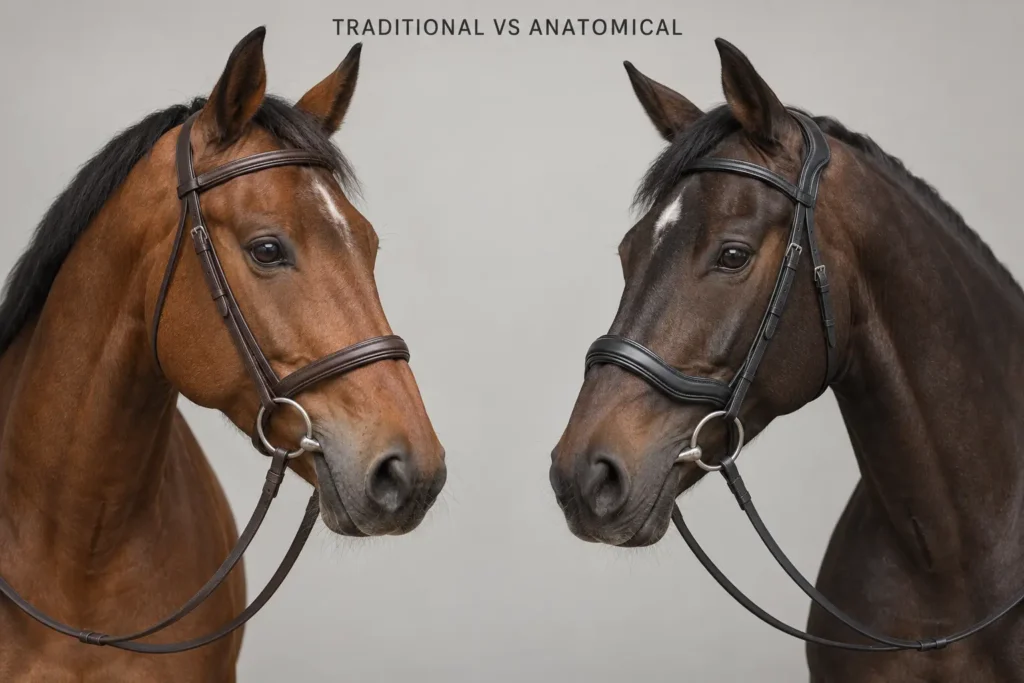
An anatomical bridle is a design approach, not a riding discipline. It may use a shaped crownpiece, ear clearance, broader padding and contoured noseband components. These features can support a premium position, but the label needs real design differences. Request measurements, underside photographs and a physical sample. A useful good-better-best structure is a traditional core bridle, a padded upgrade and a genuinely differentiated anatomical model.
Bridle Sizing: Pony, Cob, Full and Oversize
Size names are not universal measurements. A full-size crownpiece from one supplier may not match another supplier’s full-size browband or noseband.
A wholesale size specification should record finished measurements and adjustment ranges for:
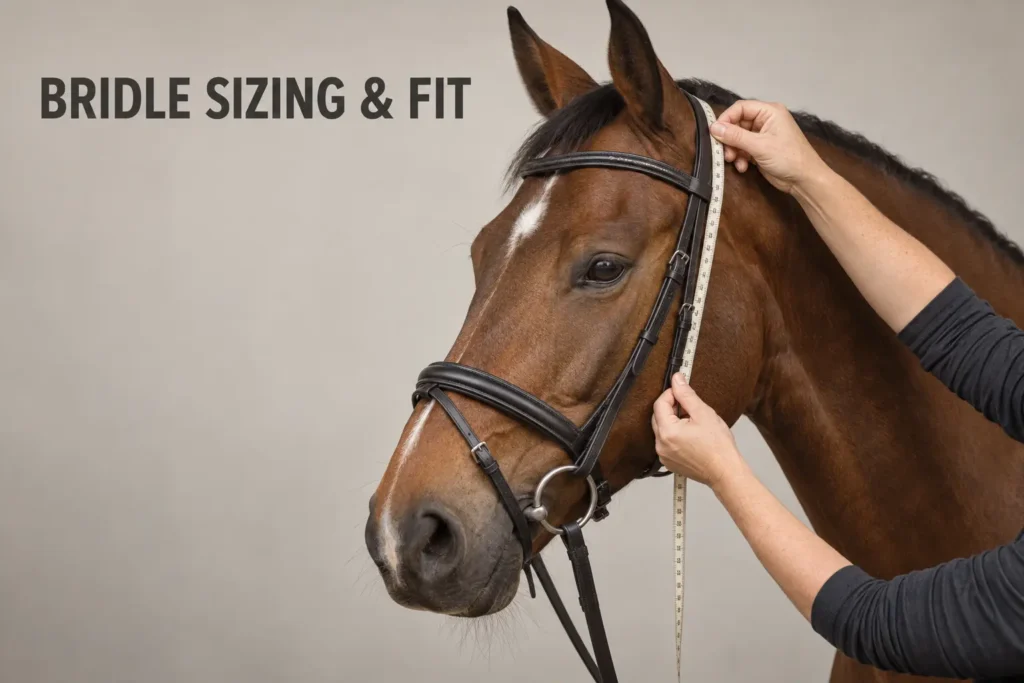
- Crownpiece and cheekpiece length
- Browband length between loops
- Noseband circumference and strap position
- Throatlatch length
- Strap width and hole spacing
- Rein length and width
Pony, cob, full and oversize or extra-full cover much of the mainstream market, but a horse may need components from different size groups. Premium brands can reduce fit-related returns by offering selected parts separately. Approve the complete size grade: the smallest and largest sizes often reveal proportion problems hidden in full size.
Leather, Padding and Hardware Specifications
A bridle is flexed and adjusted frequently, so surface appearance is not enough. Define leather type, thickness, temper, finish and color tolerance. Cheekpieces need clean edges and stable holes; reins require suitable strength and grip; padded areas should remain flexible without bulky transitions.
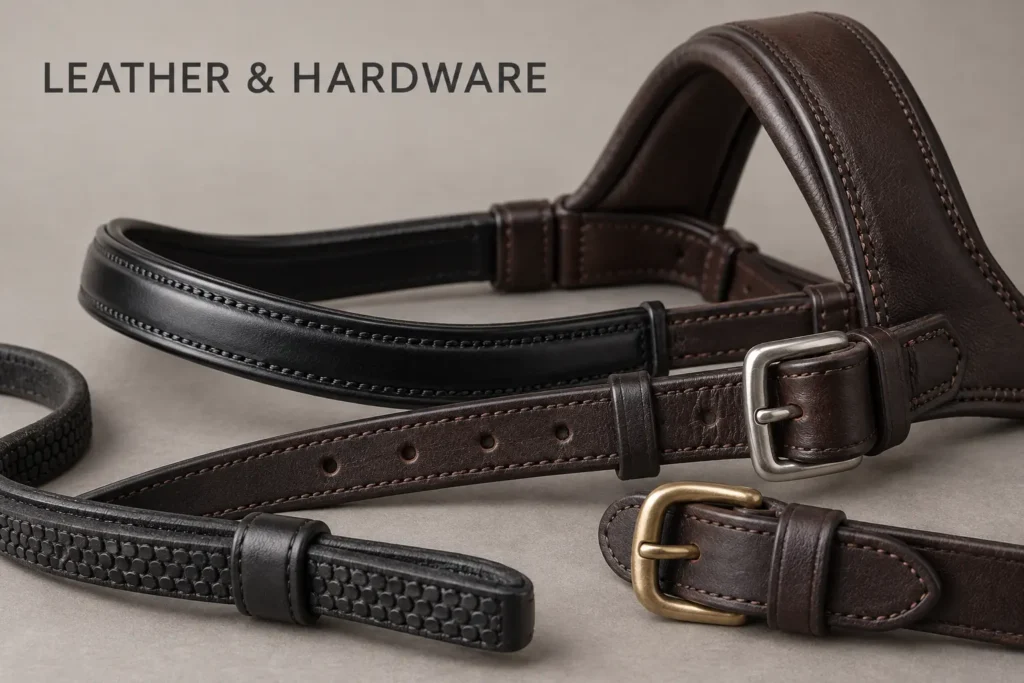
Hardware specifications should identify base material, finish, buckle shape and acceptable color variation. Stainless-look, solid brass and antique-brass finishes create different price positions and must remain consistent across matching products.
Inspect stitching at folds and billets, edge finishing around holes, skiving beneath keepers, buckle alignment and reinforcement at high-load points. HideOrax’s horse bridles and halters range can be developed with buyer-selected sizing, leather finish, padding, hardware and branding.
Which Bridle Types Suit the USA, UK and Europe?
There is overlap between all three markets, but the opening SKU mix should reflect local disciplines and retail language.
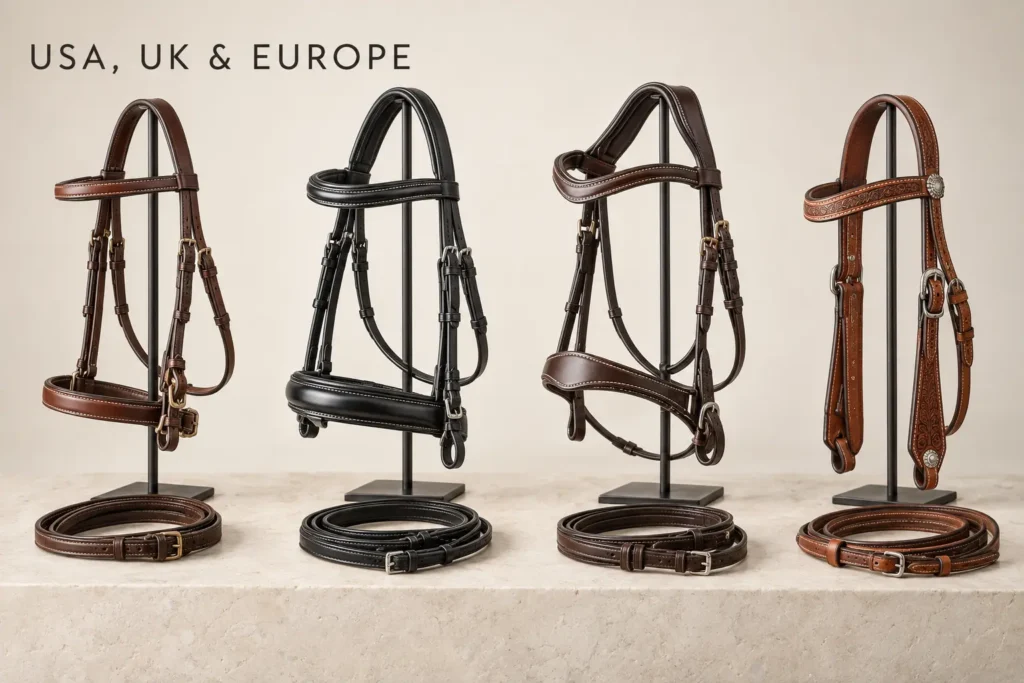
USA
A US assortment may combine brown hunter bridles, black dressage models, anatomical jumper bridles and Western headstalls. “Figure-eight” is often clearer than “grackle” in titles. Western lines may need separate leather, tooling and hardware standards.
UK
Black and brown snaffle bridles provide a strong core for general riding, pony, showing and competition customers. Cob and full sizes deserve depth, while pony sizing matters to riding schools and youth markets. Use grackle, flash and cavesson terminology accurately.
Continental Europe
Dressage, jumping and anatomical sport bridles can support a focused European range. Consider country-level preferences rather than treating Europe as one uniform market; hardware, browband, padding and noseband combinations may vary by distributor.
Across all regions, never promise that a bridle is approved for every competition. Governing-body and national rules can differ and change. Product pages should identify the construction clearly and ask riders to confirm the rules applicable to their event.
How to Build a Focused Wholesale Bridle Range
Start with customer use, not color. A compact launch might contain one core snaffle bridle, one premium anatomical model, one discipline-specific option and one regional specialist product. Add colors and sizes only where demand supports the inventory.
Coordinate bridles with matching horse reins instead of treating reins as an afterthought. Matching leather shade, buckle finish, grip and stitching make the collection easier to merchandise and improve average order value.
Each SKU should have a distinct job. If two products serve the same discipline, price and appearance, they are likely competing with each other rather than expanding buyer choice. The broader wholesale horse tack range guide explains how to balance saddles, bridles and accessories across a coordinated collection.
How to Evaluate a Bridle Manufacturer
A polished sample is only the beginning. Evaluate whether the supplier can repeat the approved measurements, leather shade, padding profile and hardware finish across sizes and future orders.
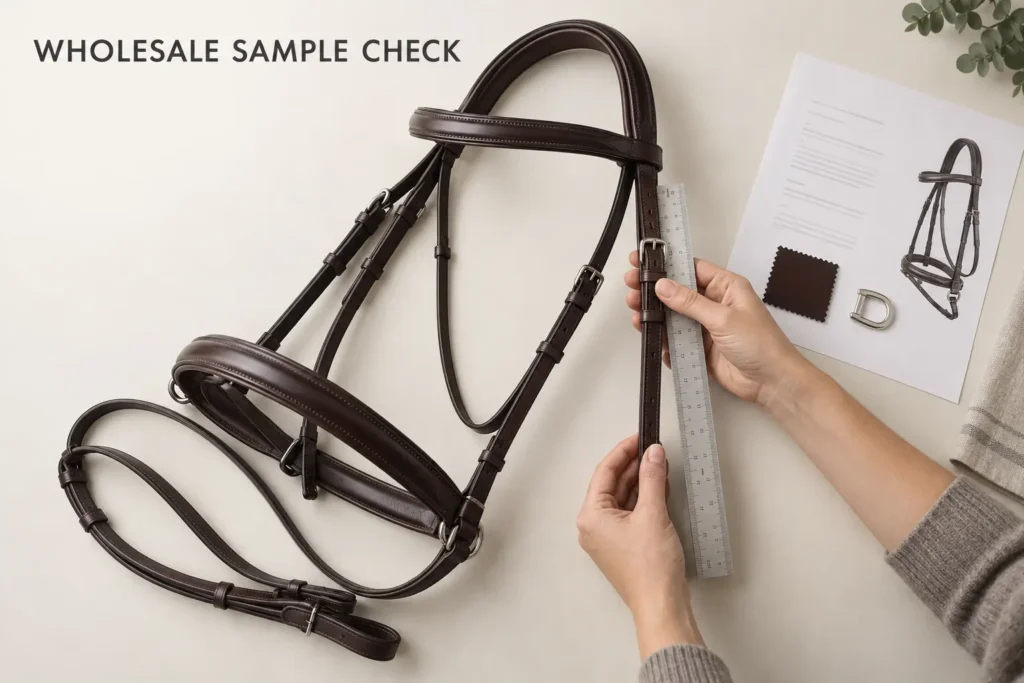
Ask for:
- A component-level measurement chart
- Material and hardware specifications
- Photographs of the sample from both sides and underneath
- Written tolerances for strap length, hole position and stitch placement
- Confirmation of logo, labels and packaging
- A retained or documented approval sample
- Pre-shipment inspection criteria
Test every buckle and adjustment hole. Flex padded transitions, check that keepers hold straps without excessive force, and compare left and right cheekpieces. On anatomical models, confirm that shaping remains consistent across the graded sizes.
HideOrax supports private-label equestrian manufacturing with specifications, branded finishing and sampling before bulk production. Its standard MOQ is 10 pieces for most tack products, with samples normally prepared in 5–7 working days after specification confirmation.
Wholesale Bridle RFQ Checklist
Send the manufacturer:
- Bridle type and intended discipline
- Target country and retail price position
- Required sizes and finished measurements
- Noseband, crownpiece and padding design
- Leather color, finish and stitching
- Hardware material and color
- Rein configuration
- Logo, labels and packaging
- Quantity by SKU and size
- Reference sample, photographs or technical drawing
The more precise the request, the more accurately suppliers can quote the same product.
Frequently Asked Questions
What are the main types of horse bridles?
The main commercial categories include snaffle, dressage, double, hunter or show, figure-eight or grackle, anatomical, bitless and Western headstalls. Some names describe the complete configuration, while others describe a discipline style or noseband. A wholesale specification should identify both.
Which horse bridle type is best for a new wholesale range?
A well-specified snaffle bridle is usually the strongest English starting point because it serves a broad customer base. Add a premium anatomical model or discipline-specific bridle only when it creates a clear difference in use, price or styling.
Are pony, cob and full bridle sizes standardized?
No. The labels are common, but finished measurements vary between brands and manufacturers. Approve a measurement chart for every component and sample the size extremes before committing to a bulk order.
Are anatomical bridles better than traditional bridles?
Not automatically. A well-designed anatomical bridle may provide useful clearance or distribute contact differently, but fit, adjustment and individual horse anatomy still matter. Buyers should evaluate the actual shape and measurements rather than the label alone.
Can bridles be manufactured with private-label branding?
Yes. Depending on the design, branding can include discreet embossing, stamped leather, metal badges, labels and custom packaging. Confirm logo size, position and color on the pre-production sample before bulk manufacturing.
Source Your Private-Label Bridle Range
A profitable bridle collection does not need dozens of near-identical SKUs. It needs clear product roles, reliable size grading, market-appropriate terminology and specifications a manufacturer can repeat.
To develop snaffle, anatomical, dressage, show or coordinated bridle-and-rein programs for the USA, UK or Europe, request a wholesale quote from HideOrax. Send your target market, sizes, materials, branding and expected quantity to receive the appropriate sampling route.