
A competitive factory price means little if the saddle arrives with the wrong tree, inconsistent leather, incomplete documentation or packaging that fails during transit.
Importing saddles is not simply a purchasing exercise. Buyers must translate market requirements into a precise product specification, approve a representative sample, confirm import obligations and calculate the complete landed cost before committing to production.
Pakistan has an established leather goods and saddlery supply base, particularly around Sialkot. The opportunity is strongest for importers, wholesalers and private-label brands that manage specifications and approvals systematically.
This guide explains how to import saddles from Pakistan while reducing avoidable product, compliance and logistics risks.
Why Buyers Source Saddles from Pakistan
Pakistan offers access to leatherworking skills, saddle construction experience, hand finishing and export-oriented product development. Buyers can source English, Western and synthetic saddles alongside matching bridles, reins, girths, stirrup leathers, saddle pads, bags and horse boots.
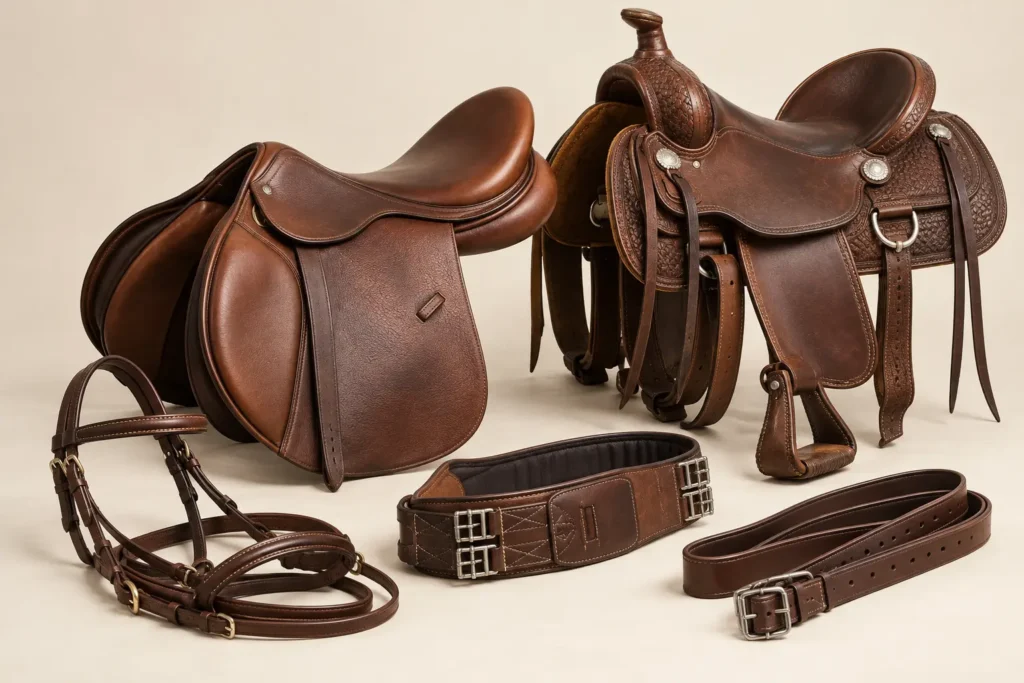
This makes the country relevant to several types of buyers:
- US tack retailers developing Western or English collections
- UK and European wholesalers sourcing English saddles and leather tack
- Private-label brands requiring customized materials and branding
- Distributors building coordinated saddle and accessory ranges
- Online equestrian businesses testing smaller initial collections
The main advantage is not simply a lower unit price. A capable supplier can combine product development, sampling, branding, bulk production and export packing under one purchasing program.
Buyers can review HideOrax’s wholesale saddle and equestrian product range before preparing an enquiry.
Step 1: Define the Product Before Requesting Prices
A request for “100 leather saddles” is not detailed enough for an accurate quotation. Two suppliers may respond with very different prices because they have interpreted the product differently.
Your purchasing brief should identify:
- Saddle style and riding discipline
- Target country and customer segment
- Required seat sizes
- Tree type and width options
- Leather type, thickness, color and finish
- Panel or underside construction
- Billet or rigging configuration
- Hardware material and finish
- Stirrup and accessory requirements
- Branding position and method
- Retail packaging
- Testing or documentation requirements
- Initial quantity and expected repeat volume
English saddles should be divided into dressage, jumping, close-contact and all-purpose models. Western saddles should be identified by intended use, such as trail, barrel, roping or general pleasure riding.
The target market also affects the specification. English saddle demand is well established in the UK and Europe, while Western collections have a larger mainstream audience in the USA. Seat-size ranges, color preferences, decoration and price positioning should reflect the customers you actually serve.
Step 2: Verify That the Supplier Controls the Product
A polished website does not prove that a supplier manufactures the goods it sells. Confirm which production stages are controlled directly and which, if any, are outsourced.
Ask the prospective supplier for:
- Recent photographs or video of relevant saddle production
- Examples from the same product category you intend to order
- A written list of materials and components
- Tree specifications and available size options
- Sample-development terms
- Quality-control procedures
- Export packing details
- Previous experience with your destination market
- The company name and address that will appear on export documents
A manufacturer should be able to discuss construction details rather than only colors and prices. For example, it should explain panel material, tree options, leather temper, billet reinforcement, rigging placement, hardware and inspection tolerances.
Use the checklist in How to Choose a Private Label Saddle Manufacturer for a more detailed supplier assessment.
Step 3: Approve a Physical Sample
Never treat product photographs as final approval for a wholesale order.
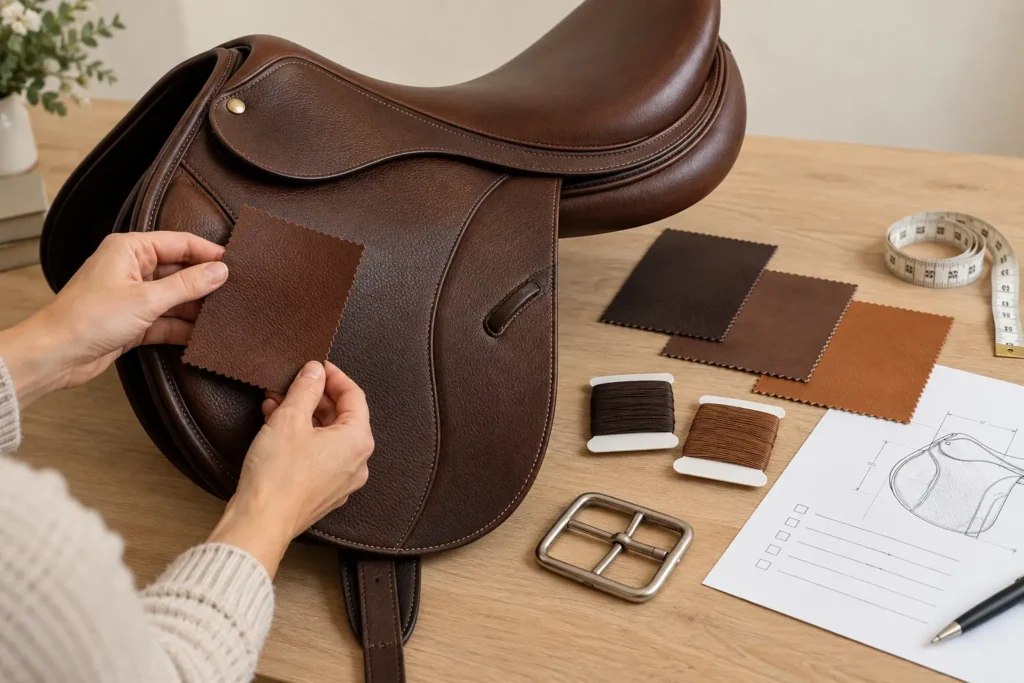
The sample should establish the reference for:
- Overall shape and balance
- Seat size and profile
- Tree configuration
- Flap, skirt or fender dimensions
- Leather grain, color and flexibility
- Padding and panel construction
- Stitching color and consistency
- Hardware size and finish
- Branding position
- Finished weight
- Packaging method
Inspect the sample under natural light and compare every detail with the specification sheet. Record requested corrections in writing and ask the manufacturer to confirm them before production.
The approved sample becomes the “golden sample” for bulk comparison. Keep it available until the entire order has been received and inspected.
HideOrax’s private-label equestrian manufacturing service allows buyers to define materials, colors, dimensions, hardware, branding and packaging before bulk production.
Step 4: Confirm Classification and Product Obligations
Customs classification
Saddlery and harness products generally fall under HS heading 4201, but the final commodity code can depend on the product, materials and importing country. The US, EU and UK may use additional digits beyond the international heading. Confirm the final code with your customs broker instead of copying a code from another shipment.
Classification affects duty, documentation and customs declarations. Provide your broker with a clear product description, materials, intended use, value and country of origin.
Importing into the USA
The importer of record is responsible for reasonable care in classification, valuation and compliance. A supplier or freight forwarder can prepare documents, but the US buyer should still review the declared product description, quantity, value and origin.
Before shipping, confirm:
- The applicable HTS classification
- Country-of-origin marking
- Commercial invoice requirements
- Importer identification requirements
- Any state-level chemical or labeling obligations
- Whether special materials create additional restrictions
If products are specifically marketed for children, confirm whether additional US consumer-product requirements apply.
Importing into the European Union
EU buyers should check customs measures through Access2Markets and review product safety, chemical and traceability requirements.
The General Product Safety Regulation requires consumer products placed on the EU market to be safe and supported by appropriate identification, traceability and safety information. The precise responsibilities depend on whether the buyer acts as importer, distributor or private-label manufacturer.
Leather, dyes, adhesives and metal components should also be assessed against applicable REACH restrictions. Buyers may request material declarations or laboratory testing based on their risk assessment and sales market.
Do not add CE marking merely as decoration. It should only be used when legislation applicable to the specific product requires it.
Importing into the UK
Businesses importing or selling consumer products in the UK are responsible for product safety and appropriate labeling. They should also keep supplier and product records that allow the goods to be traced.
Great Britain and Northern Ireland can follow different regulatory arrangements, so confirm the destination before finalizing labels and importer details.
Step 5: Calculate Landed Cost, Not Just Factory Price
A low quotation can become expensive after freight, duty, brokerage and destination charges are added.
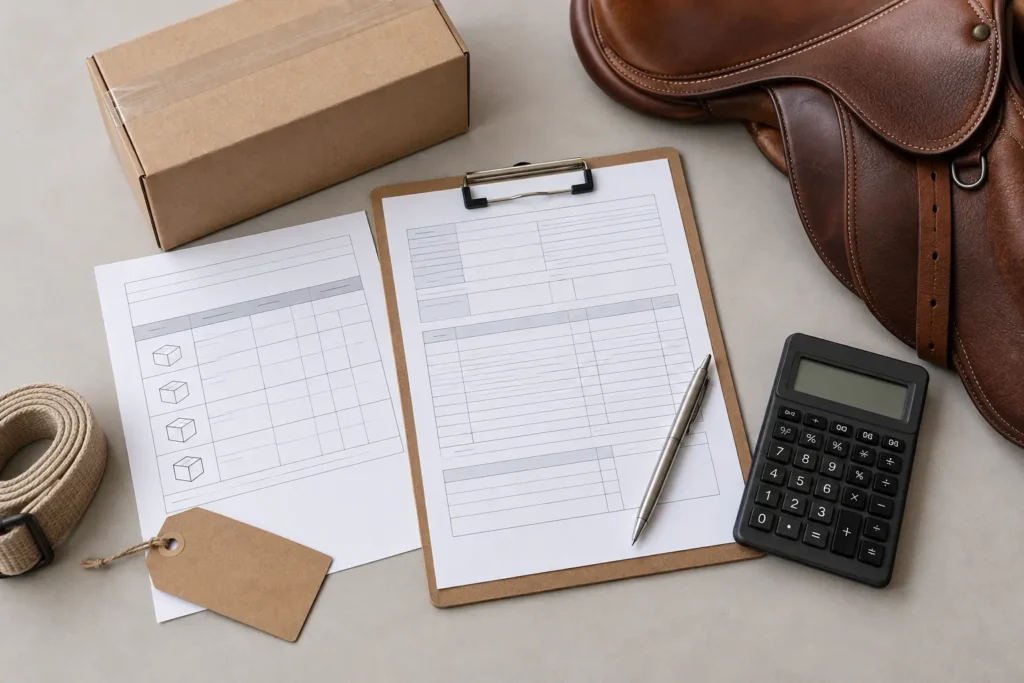
Calculate landed cost using:
- Product price
- Sampling and development charges
- Branding or tooling charges
- Inland transport in Pakistan
- Export documentation
- Freight
- Cargo insurance
- Import duty
- VAT or sales tax
- Customs brokerage
- Port, terminal or airport charges
- Storage or examination fees
- Final delivery to your warehouse
- Inspection and testing costs
Divide the complete cost by the number of saleable units, not simply the number ordered. Include a realistic allowance for damaged packaging, rejected units and currency movement.
Choose the correct Incoterm
The Incoterm determines where cost and risk move from seller to buyer.
Common options include:
- EXW: The buyer controls collection from the supplier but carries most transport responsibility.
- FCA: Often practical for air or multimodal shipments because the seller delivers to an agreed carrier or location.
- FOB: Used for sea freight, with delivery completed when goods are loaded at the named port.
- CIF: The seller arranges sea freight and minimum insurance to the destination port.
- DAP: The seller arranges transport to the named destination, while import clearance normally remains with the buyer.
- DDP: The seller assumes extensive responsibility, including import procedures. Buyers should confirm that the arrangement is legally and operationally workable.
Write the named place and agreed Incoterms version on the purchase order and proforma invoice.
Step 6: Control Bulk Production and Inspection
Sample approval does not remove the need for bulk quality control.
The purchase order should reference the approved sample and include measurable requirements. If a material or component becomes unavailable, the supplier should request written approval before making a substitution.
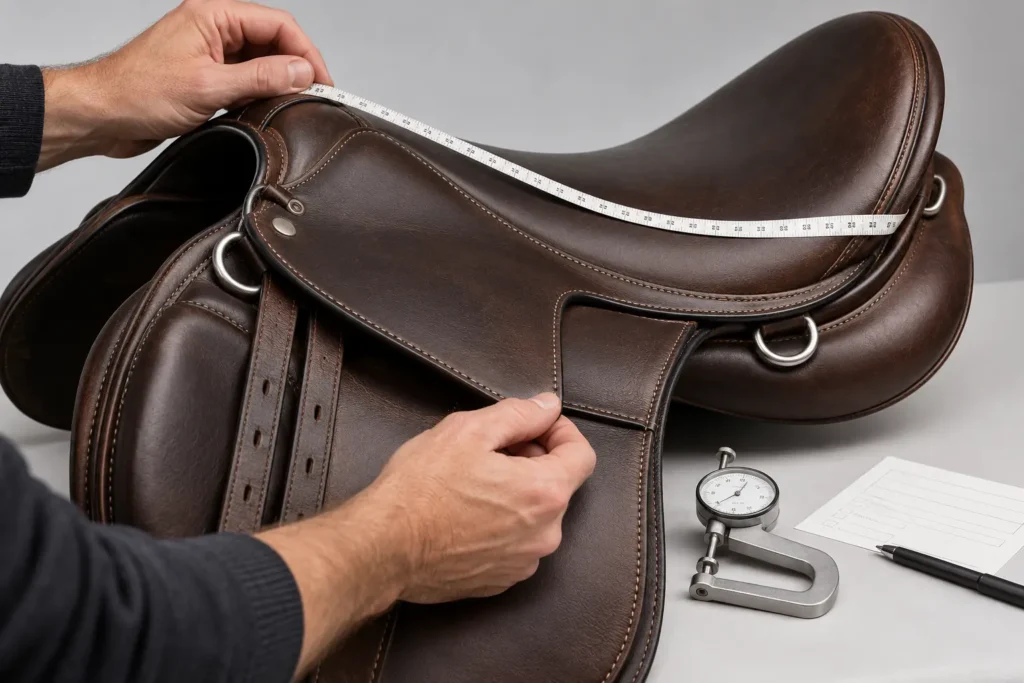
Pre-shipment inspection should cover:
- Order quantity and size breakdown
- Seat and component measurements
- Tree and construction specification
- Leather color and surface consistency
- Panel, flap, skirt or fender alignment
- Billet or rigging attachment
- Stitching and edge finishing
- Hardware operation and finish
- Branding position
- Finished weight
- Carton quantity, dimensions and gross weight
- Packaging and shipping marks
Inspection results should be recorded with photographs and linked to the order number. HideOrax outlines its production and quality checkpoints on the manufacturing and inspection process page.
Step 7: Specify Export Packaging
Saddles are bulky, shaped products with surfaces and hardware that can be damaged by pressure or movement.
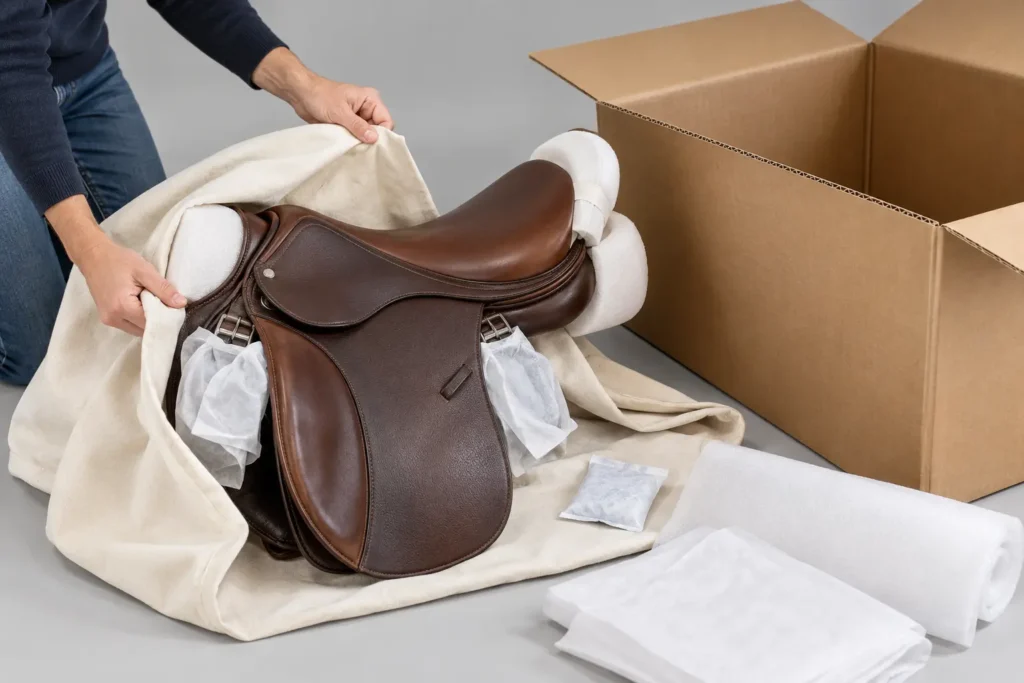
A practical export-packing specification may include:
- Breathable individual dust cover
- Protection around the pommel, cantle and horn
- Wrapped stirrups and exposed hardware
- Secured straps to prevent abrasion
- Moisture-control material where appropriate
- Strong double-wall export carton
- Internal support to retain shape
- Agreed carton labels and purchase-order references
Request carton dimensions and gross weights before booking freight. Saddle shipments are often affected by volumetric weight, particularly when sent by air.
If solid-wood pallets, crates or dunnage are used, confirm ISPM 15 treatment and marking requirements. Both US and EU authorities regulate qualifying wood packaging used for imports.
Step 8: Check the Shipping Documents
Document names and requirements can vary, but a standard commercial shipment commonly includes:
- Commercial invoice
- Packing list
- Bill of lading or air waybill
- Certificate of origin when required
- Insurance certificate when applicable
- Material or test documentation requested by the buyer
- Inspection report
- Purchase order and approved specification
- Freight and arrival information
Descriptions should be specific. “Leather goods” is weaker than “adult equestrian English saddles with leather upper components.” The commercial invoice, packing list and transport document should agree on quantities, weights, consignee information and order references.
Send draft documents to the buyer or customs broker before departure so corrections can be made without delaying clearance.
A Safer First-Order Strategy
A first order should verify the full supply chain, not maximize quantity.
Start with a controlled selection of sizes and models. Avoid introducing too many leather colors, tree variations, hardware finishes and packaging formats at once. Review the sample, communication, bulk consistency, documentation, transit protection and customer response before expanding.
HideOrax supports a minimum order of five saddles, allowing wholesale buyers to test a focused range before placing larger repeat orders. Samples can normally be developed in 5–7 days after specifications and materials are confirmed.
Import Checklist for Wholesale Buyers
Before authorizing shipment, confirm that you have:
- A written product specification
- An approved physical sample
- A signed purchase order
- Agreed Incoterm and named place
- Confirmed customs classification
- Required product and importer labeling
- Approved bulk inspection
- Carton dimensions and weights
- Draft commercial documents
- A customs broker or clearance plan
- Cargo insurance where appropriate
- Written procedure for shortages or defects
Frequently Asked Questions
Can I import saddles from Pakistan into the USA or Europe?
Yes. Saddles can be commercially imported from Pakistan, subject to destination-country customs, product safety, labeling and documentation requirements. Confirm the specific requirements with your customs broker before production and again before shipment.
What HS code is used for horse saddles?
Horse saddles are generally classified within HS heading 4201, covering saddlery and harness for animals. The complete national commodity code can vary, so the importer or customs broker should confirm the final classification.
What documents are normally needed to import saddles?
A typical shipment uses a commercial invoice, packing list and bill of lading or air waybill. A certificate of origin, insurance certificate, material declaration, test report or inspection record may also be needed depending on the country and buyer requirements.
Should saddle samples be shipped by air?
Air freight is normally practical for samples and urgent small orders. Bulk orders may be more economical by sea, but the decision should be based on total carton volume, shipment weight, delivery deadline and destination charges.
What is HideOrax’s minimum order for wholesale saddles?
HideOrax’s standard minimum order is five saddles. The final quotation depends on the style, materials, sizes, customization, packaging and destination.
Request a Wholesale Saddle Quotation
A successful import order begins with a detailed specification, an approved sample and a clear shipping plan.
Request a quotation from HideOrax with your required saddle style, seat sizes, materials, quantity, branding and destination country. The team will review the project and confirm sampling, pricing and the appropriate production route.