
A large catalog can still be a weak wholesale range.
Too many disconnected products tie up cash, complicate stock control and make a new equestrian brand harder to understand. A focused range serves a defined rider and connects related products.
For importers, wholesalers, tack shops and private-label brands, the central question is not simply, “Which horse products can we buy?” It is, “Which product combination suits our market, price position and opening order?”
This guide explains how to plan a wholesale horse tack range for the USA, UK and Europe, from anchor products and regional demand to sizing, branding, MOQs and supplier evaluation.
What Does Wholesale Horse Tack Include?
Wholesale horse tack covers equipment used to ride, handle, protect or equip a horse, purchased in trade quantities for resale or distribution. A typical range may include saddles, bridles, halters or headcollars, reins, girths or cinches, stirrup leathers, stirrups, saddle pads, horse boots and saddle bags.
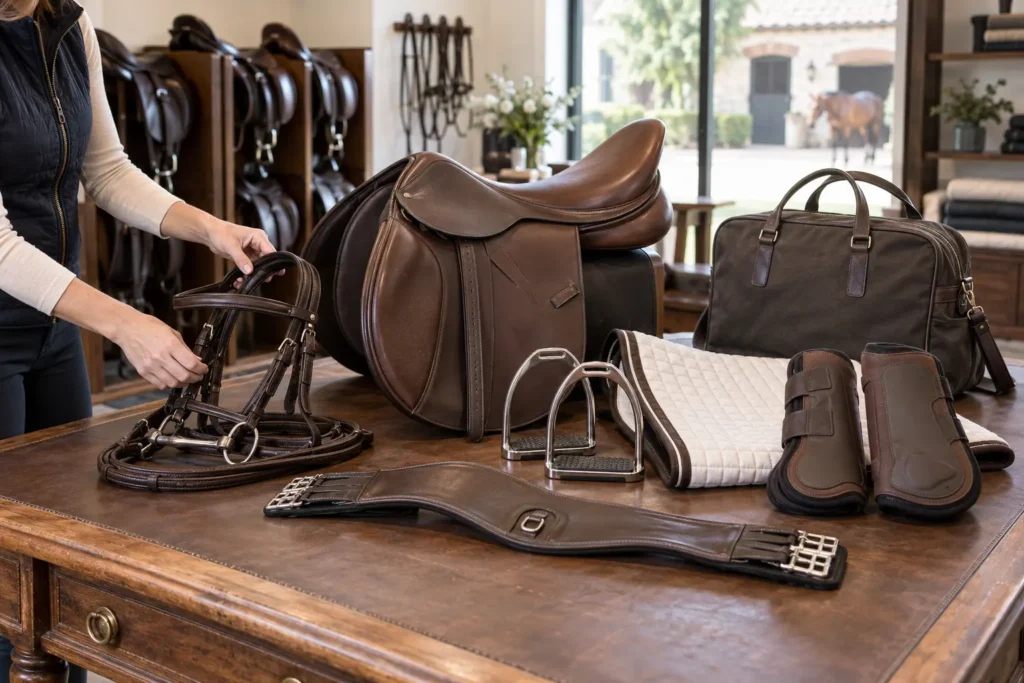
For sourcing purposes, divide the category into product systems rather than treating every item as a separate opportunity:
| Product system | Typical products | Main buying decisions |
|---|---|---|
| Saddlery | English, Western and synthetic saddles | Discipline, tree, seat size, material, weight and retail position |
| Head and control | Bridles, halters or headcollars, reins | Leather or webbing, sizing, hardware, grip and matching colors |
| Saddle connection | Girths, cinches, stirrup leathers, stirrups | Lengths, load-bearing materials, buckle finish and safety features |
| Comfort and protection | Saddle pads, horse boots | Shape, padding, fabric, closures, colors and care requirements |
| Trail and storage | Saddle bags and panniers | Capacity, attachment method, weather resistance and saddle compatibility |
| Professional equipment | Farrier aprons | Protection zones, material, fit, weight and tool storage |
This structure helps buyers plan coordinated collections and identify products that can share materials, colors or packaging. HideOrax’s wholesale equestrian product range shows how saddles and related tack can be sourced within one program.
Start With Anchor Products, Then Add Attachments
An anchor product gives the collection its identity. For a dressage-focused retailer, that might be an English saddle or anatomical bridle. For a Western store, it may be a trail saddle. A value-oriented online brand could lead with a synthetic saddle and practical matching accessories.
Once the anchor is selected, add products that serve the same customer and buying occasion.
Example: English Riding Range
- One all-purpose or general-purpose saddle
- One discipline-specific saddle, such as dressage or jumping
- Coordinating bridle and reins
- Two or three girth lengths
- Stirrup leathers and irons
- Saddle pad and horse boots in controlled colors
Example: Western Riding Range
- One trail or general Western saddle
- Coordinating bridle or headstall and reins
- Cinch and compatible rigging accessories
- Western stirrups
- Saddle pad
- One or two saddle bag formats
The goal is to cover a credible use case, then expand after learning which sizes, materials and price points sell through.
Plan the Range for the USA, UK or European Market
The same collection should not be copied unchanged across every region. Riding disciplines, terminology, familiar sizes, color preferences and retail price expectations all affect the buying plan.
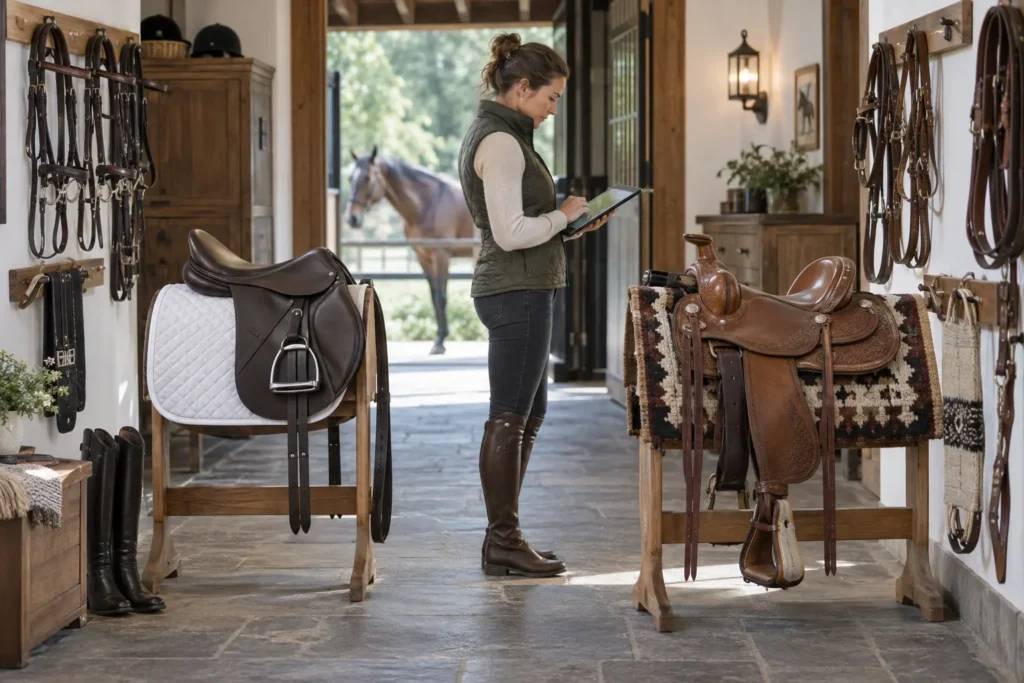
USA: Serve Western and English Segments Deliberately
Western tack has a large US market, but the country also supports established hunter, jumper, dressage and general English-riding segments. Define the intended channel before choosing products.
A Western-oriented range may prioritize trail, barrel or ranch-style saddles, cinches, fenders, stirrups, headstalls and saddle bags. An English range may focus on all-purpose, close-contact or dressage saddles, bridles, reins, girths and pads.
Use the terminology customers expect. “Halter,” “cinch” and “all-purpose saddle” are familiar US terms. Product pages should still explain dimensions and compatibility rather than relying on names alone.
UK: Build Around English Disciplines and Familiar Language
UK tack ranges commonly center on general-purpose, jumping and dressage equipment. Buyers should plan saddle styles, bridles, reins, girths, stirrup leathers, pads and protective boots as related groups.
Use familiar terms such as “headcollar,” “girth” and “general-purpose” or “GP saddle” where appropriate. Inches remain common in equestrian sizing, but clear charts should remove ambiguity.
Europe: Localize Beyond Translation
Europe is not one uniform sales territory. Discipline mix, colors, sizing conventions, price tolerance and language differ by country and channel.
Use sales evidence, retailer interviews and competitor assortment review. Keep technical measurements consistent, then localize product names, care instructions and packaging.
Choose a Clear Material and Price Architecture
A wholesale range needs an understandable reason for each price level. Adding random materials often creates confusion rather than useful choice.
One practical structure is:
- Core/value: functional designs, controlled options and efficient packaging
- Mid-range: upgraded materials, padding, hardware or finishing
- Premium/private label: detailed specifications, selected leather, custom branding and presentation
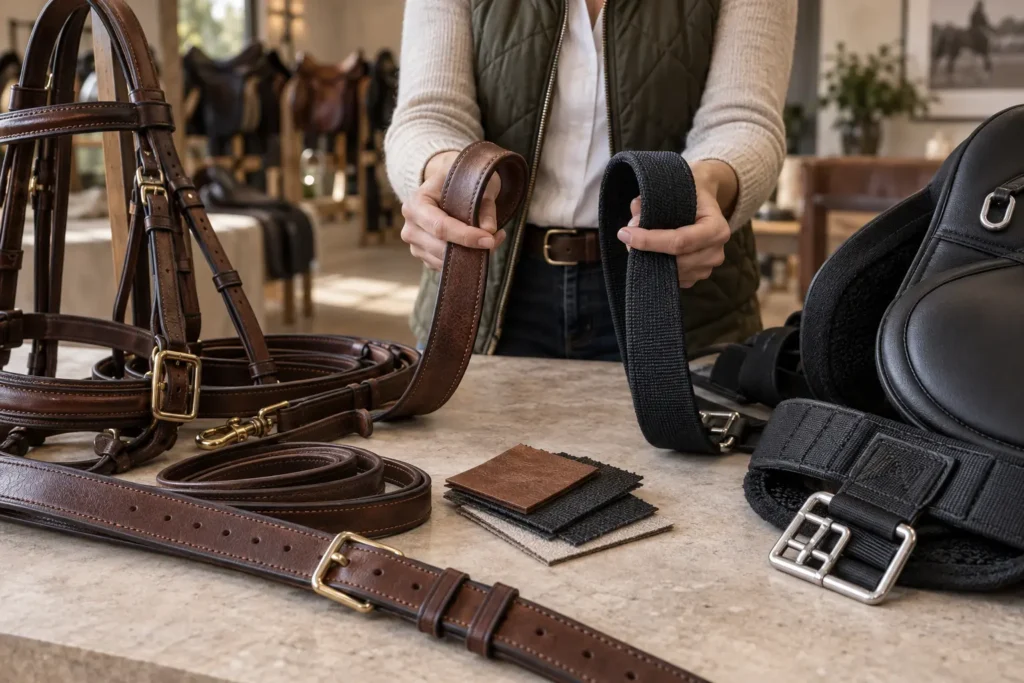
Leather tack can support a traditional and premium position. Synthetic products may suit buyers prioritizing lower weight, easy care or an accessible price. The specification should match the intended use and retail promise.
Within a leather collection, coordinate color, grain, hardware and edge finish. Within a synthetic range, control fabric, webbing, foam, bindings and colorfast appearance. Mixed-material collections still need a consistent visual language.
Control Sizes, Colors and SKUs Before They Multiply
Every added size, color and hardware finish creates another stock-keeping unit. Five products can quickly become dozens of SKUs if every option is launched at once.
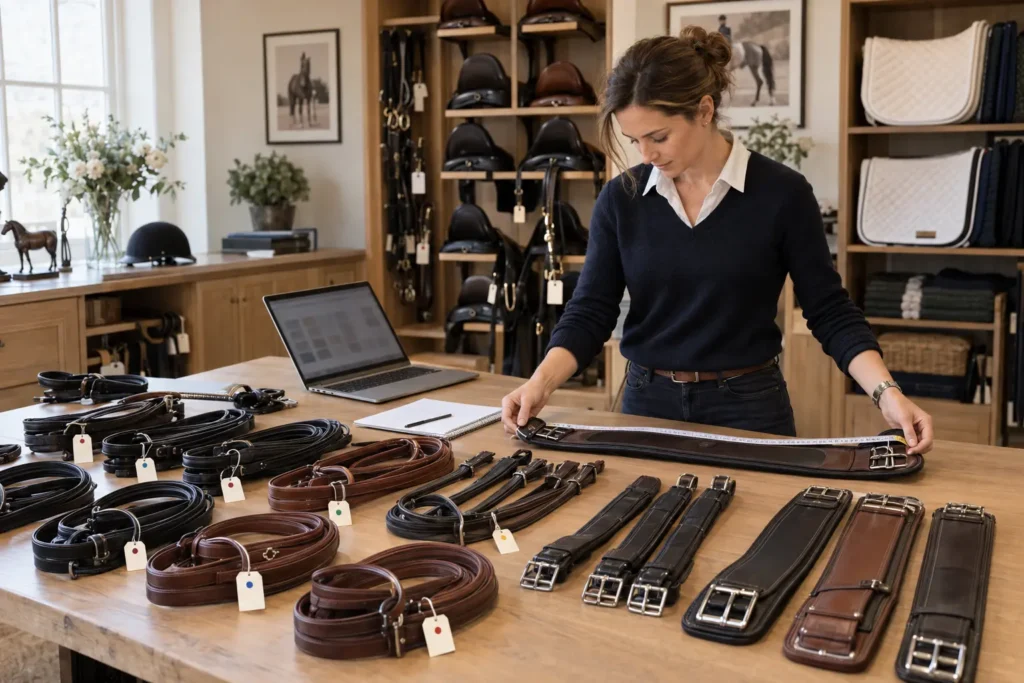
Build an initial matrix that records:
- Product family and model code
- Discipline or intended use
- Material and color
- Size or length
- Hardware finish
- Branding method
- Packaging format
- Order quantity per variation
Use a coding system that remains readable. For example, a code might identify product family, model, color and size without placing confidential supplier details in the customer-facing name.
For the first order, concentrate quantity in the sizes and colors supported by your market data. Keep specialist variants for later testing.
Design Private-Label Horse Tack as One Collection
Private labeling is more than stamping a logo on unrelated products. The collection should use repeatable brand rules across saddles, bridles and accessories.
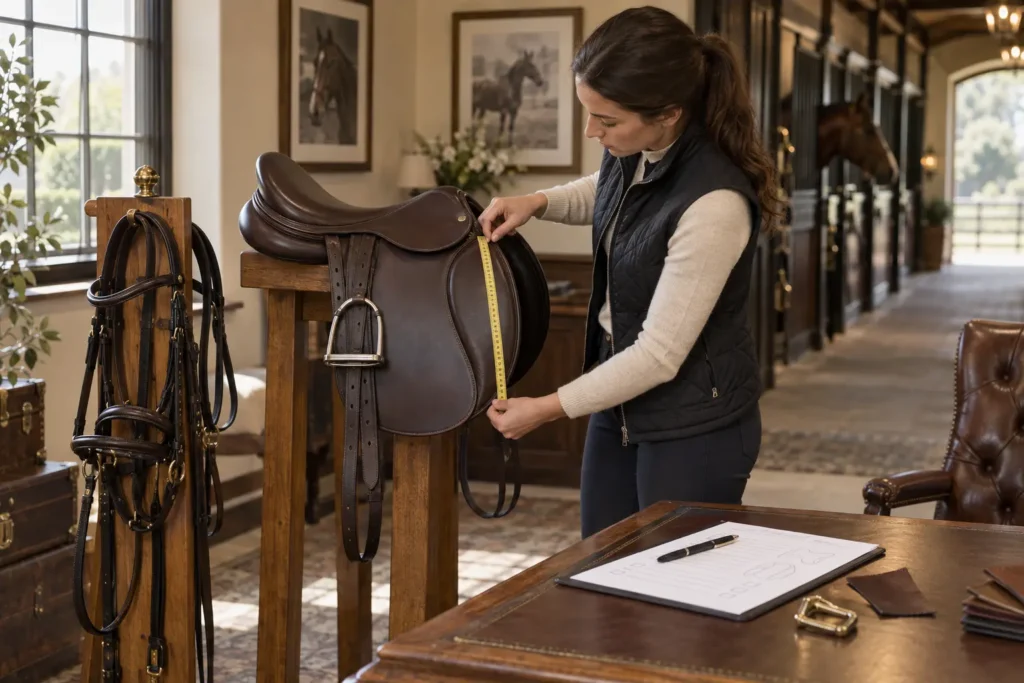
Define:
- Logo size, position and application method
- Leather colors and acceptable variation
- Hardware color and finish
- Stitching color and thread weight
- Woven labels, badges or embossed marks
- Hangtags, barcodes and product codes
- Care instructions and country-of-origin marking
- Inner protection and export carton requirements
Branding must suit the component. A subtle stamp may work on a bridle, while a saddle may need a badge, plate or controlled embossing position. Textile products may require woven labels rather than the same method used on leather.
HideOrax’s private-label equestrian manufacturing service covers agreed materials, colors, dimensions, hardware, branding and packaging before bulk production.
Plan a First Wholesale Order Without Overbuying
An opening order should validate the offer, not attempt to predict every future sale. Start with a narrow product story, representative sizes and a reorder plan.
A practical first order often includes:
- One or two anchor models.
- Accessories that fit the same rider and discipline.
- A controlled color palette.
- Core sizes supported by market evidence.
- One approved sample for each construction or material family.
- Packaging and labels ready for retail or distribution.
HideOrax’s standard starting MOQ is five saddles or ten pieces for other product categories. Sample development is typically five to seven days after the specification and materials are confirmed. Final timing and price depend on the product, customization and order mix.
Low MOQs still require a clear order. Ten pieces divided across too many colors and sizes may provide little useful sales data. Confirm how quantities apply by model, color and size.
How to Evaluate a Wholesale Horse Tack Supplier
A supplier should be able to reproduce a coordinated range, not just send one attractive sample.
Confirm Product-Family Capability
Ask which products are made in-house and whether the supplier can coordinate leather, hardware and colors across categories. Responsibility for inspecting outside components should be clear.
Compare the Sample With a Written Specification
The sample record should identify materials, dimensions, colors, hardware, stitching, branding and packaging. Photographs help, but measurable requirements make repeat orders more reliable.
Test Compatibility Across the Range
Check whether reins suit the selected bridle, stirrup leathers fit the irons, girth lengths match the saddle offer, and bags attach to the intended saddle. A visually coordinated collection can still fail if components do not work together.
Review Quality Control and Reorder Records
Ask how the approved sample is used during bulk inspection and how specifications are retained. HideOrax outlines material review, sample approval, production, inspection and export packing in its manufacturing and quality-control process.
Assess Communication Before Price Alone
A useful supplier asks specific questions, records changes and explains cost differences. A quote should identify what is included. For a deeper due-diligence checklist, read How to Choose a Private Label Saddle Manufacturer.
What to Include in a Wholesale Horse Tack RFQ
Send enough information for suppliers to quote the same requirement:
- Target country and sales channel
- Rider segment and discipline
- Product list and reference images
- Materials, colors and hardware finishes
- Sizes and estimated quantity per variation
- Branding and packaging requirements
- Target retail or wholesale position, if appropriate
- Sample requirements
- Delivery destination and target date
- Any testing, labeling or documentation required by your business or destination market
If the design is not final, separate confirmed requirements from areas where you want the supplier to propose options. This produces a more useful response than asking for a general catalog and “best price.”
Frequently Asked Questions
What horse tack products should a new retailer stock first?
Start with one clear rider segment and an anchor product, then add compatible essentials. An English range might combine a saddle, bridle, reins, girth, stirrup leathers and pad. A Western range might combine a saddle, headstall, reins, cinch, stirrups, pad and saddle bag. Use local sales data to choose sizes and colors.
What is the difference between wholesale horse tack and private-label horse tack?
Wholesale horse tack may be sold under an existing supplier brand or as unbranded stock. Private-label horse tack is made or finished to carry the buyer’s brand, usually with agreed product specifications, labels and packaging.
Can I order saddles and matching accessories from one supplier?
Yes, if the supplier has capability across those categories and can control compatibility, materials, colors, hardware and quality records. Approve representative samples before placing the combined bulk order.
What is a reasonable MOQ for private-label horse tack?
MOQs vary by product, material and customization. HideOrax’s standard starting quantity is five saddles or ten pieces for other products. Confirm whether the MOQ applies per model, color, size or total order.
How do I compare quotes from horse tack suppliers?
Give each supplier the same written RFQ. Compare materials, dimensions, included accessories, branding, packaging, sample terms, quality controls, lead time and freight basis alongside the unit price.
Build a Wholesale Range Around a Real Customer
The strongest product range is not the largest. It connects a defined rider, discipline and price position with products that work together and can be reordered consistently.
HideOrax manufactures English, Western and synthetic saddles plus coordinated tack for importers, wholesalers and private-label equestrian brands. To discuss your target market, products, sizes, branding and opening quantity, request a wholesale horse tack quotation.