
A saddle pad may look simple in a product photograph, yet a bulk order can vary in outline, thickness, lining, stitching, attachment straps and label placement. Those details affect how a pad sits beneath its intended saddle and how consistently a retailer can present the range.
For wholesale buyers, the first decision is the pad style and intended saddle. The next is a written specification that a supplier can sample and repeat. This guide covers four styles listed by HideOrax and shows how to prepare a useful request for quotation. HideOrax
Which type of saddle pad should you source?
These names describe different product briefs, not interchangeable sizes. Ask for a style specific measurement sheet and a physical sample before approving production.
| Pad style | Typical buying brief | Details to specify |
|---|---|---|
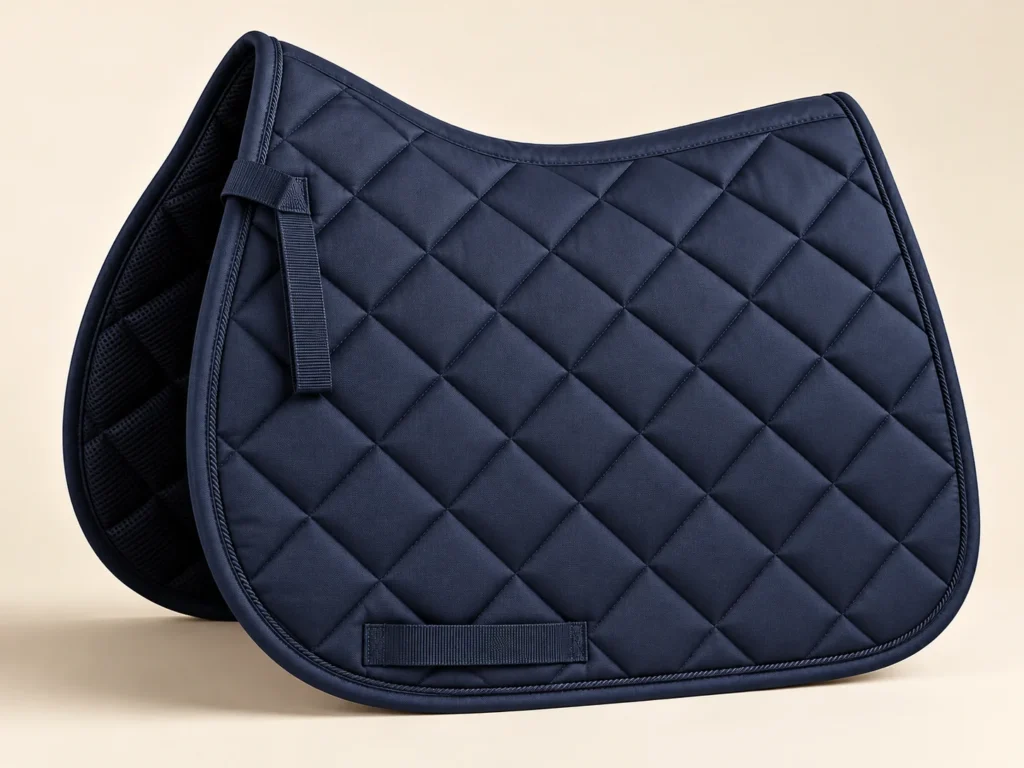
| All-purpose English pad | A shaped English pad with broad side coverage | Saddle reference, spine length, side drop, wither contour, attachments, quilting and trim |
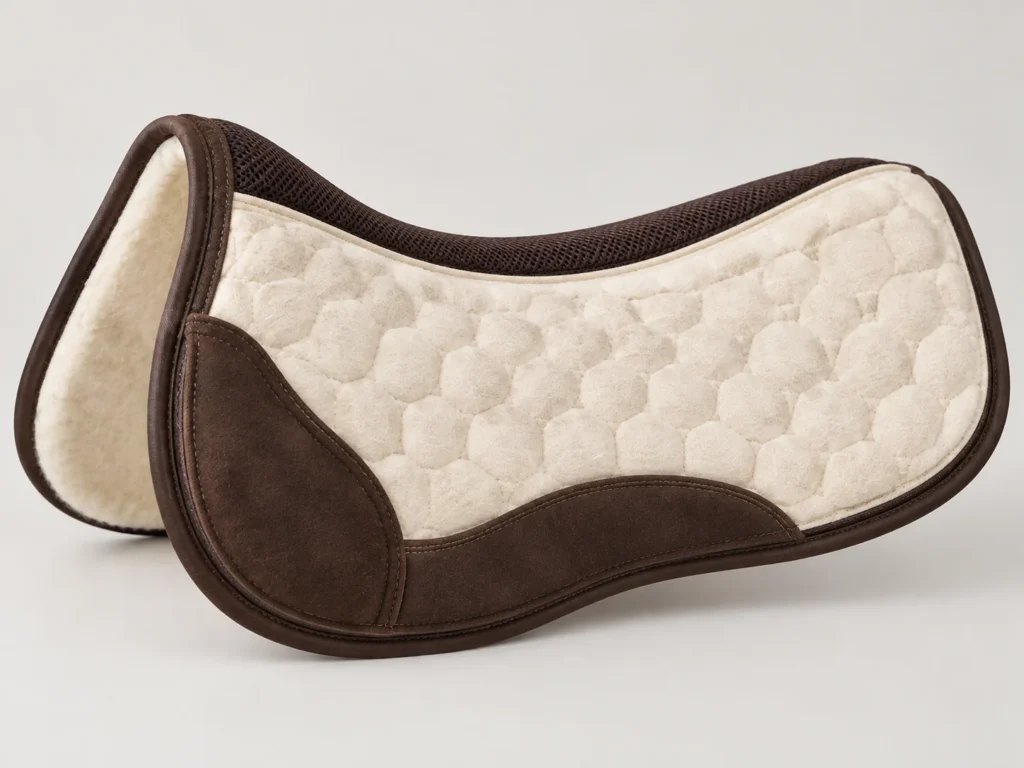
| Half pad | A smaller layer used with a compatible saddle and, often, another pad | Finished footprint, contour, layer thickness, lining and intended use |
| Trail pad | A pad for a defined trail saddle and use case | Saddle dimensions, coverage, reinforcement, attachments and any requested pocket |
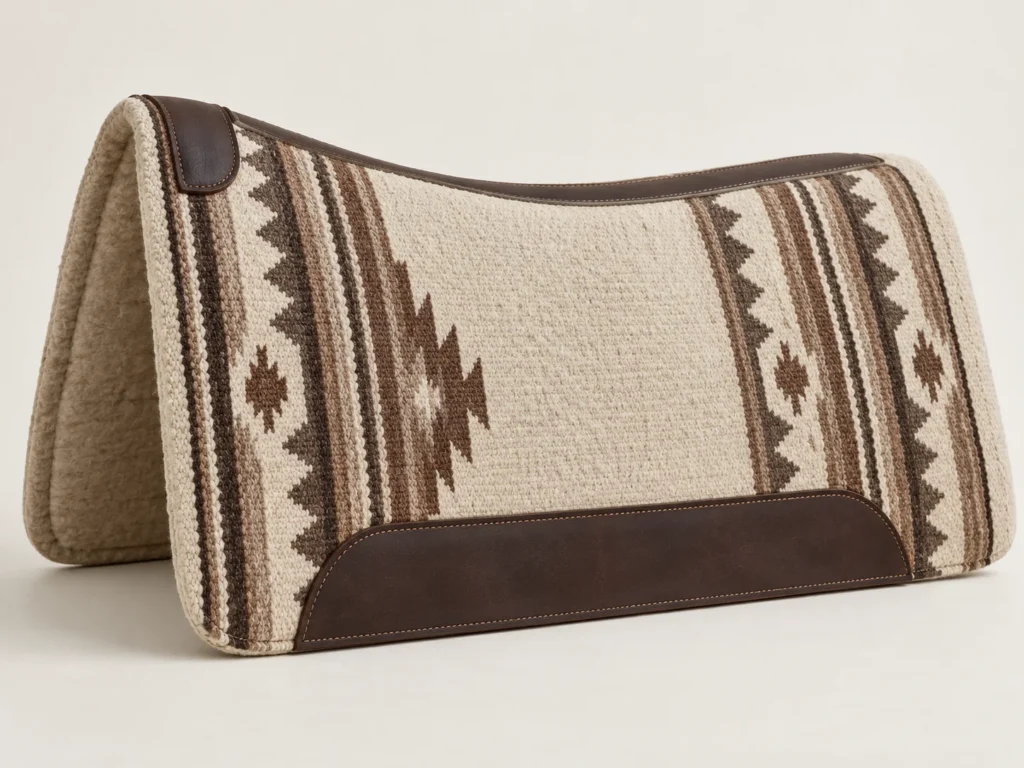
| Western pad | A broader pad for a specified Western saddle | Length, width, profile, textile construction, edge finish and reinforcement placement |
A half pad should not automatically be treated as a substitute for a full pad. Likewise, an English pad pattern should not be stretched into a Western style. Define each product against the actual saddle category you sell. Buyers building a matching range can compare HideOrax’s English saddles and Western saddles before deciding which pad designs belong in the collection.
Begin with fit references and finished measurements
“Full size” alone is not a complete production specification. Suppliers and retailers may use the same size word for different outlines. Share a reference pad or measured drawing, identify the intended saddle, and state the dimensions of the finished article.
For an English pad, record the spine length from front to rear, the vertical drop on each side, the lowest point of the outline, and the location and length of attachment straps. Mark the intended wither contour and the amount of pad visible around the saddle. For a Western pad, specify the overall footprint and the locations of wear patches. For a half pad, document its footprint and the layering arrangement in which the sample will be evaluated.
Use one unit throughout the specification, such as centimetres, and label the points on a photograph or diagram. Ask the manufacturer to state practical production tolerances for the chosen design. When the sample arrives, check it with the intended saddle. A product photograph on a table cannot establish compatibility with every horse or saddle; final fit must be assessed for the individual combination.
Build the material specification layer by layer
A useful pad brief names each layer rather than requesting “premium fabric.” Ask for swatches or a sample construction showing:
- Outer fabric: Composition, weave or surface finish, colour reference and fabric weight if relevant.
- Lining: Composition and surface texture, with the side facing the horse identified.
- Filling: Material, nominal thickness or weight, and how it is distributed.
- Edge: Binding or piping material, width, colour and stitch finish.
- Reinforcement: Placement and material for any contact or wear area.
The right combination depends on price point, intended use, cleaning instructions and appearance. Use claims such as “breathable,” “shock absorbing” or “moisture wicking” in customer facing copy only when the exact construction supports them. Ask for the layer composition, a sample and any relevant test evidence.
Specify quilting, stitching and attachments
Quilting affects the look of the pad and helps hold its layers in position. Decide whether the range uses diamonds, squares, waves or another pattern. Record the spacing, stitching colour and where the pattern starts and stops. Inspect both sides of the sample for loose threads, uneven seams, missed stitches, shifting fill and puckering around the border.
Give the edge its own approval point. Compare piping thickness and binding width around curved sections, where an attractive flat sample can reveal uneven tension. If the pad has girth loops, billet straps or hook and loop closures, record their positions, finished lengths, material and stitching. Check that the approved sample attaches in the intended way. The same strap layout may not work across all saddle styles.
A concise approval sheet with close-up photographs is more useful than a general request for “better stitching.” Circle any issue, note the correction and ask for an updated sample or clear correction photographs before approving bulk production.
Design a private label range buyers can recognize
A private label pad can carry branding through embroidery, a woven label, binding colour, a hangtag or retail packaging. HideOrax lists shape, quilting, filling, binding, colours, embroidery, woven labels and packaging among its customization options. Confirm availability, costs and minimums for your particular combination in the quotation. HideOrax
Send a vector logo where possible, plus a placement diagram with measurements from a fixed edge. Check that the design remains readable after stitching and does not distort the pad. Approve an actual embroidery or label sample, especially when matching colours across fabrics.
For a coordinated tack collection, create a colour standard covering the pad, binding, label and companion items such as horse boots. Review physical swatches together: screen colours can differ from delivered textiles. Buyers planning a wider collection can also review HideOrax’s private label equestrian manufacturing options.
Check trail and Western styles as separate products
Trail pads may be specified with reinforcement or storage details, but request and price those features explicitly. If a pocket is part of the design, inspect its closure, location, capacity and stability on the approved sample. Avoid placing bulky items where they could interfere with saddle position.
Western pads need their own dimensions, textile and reinforcement brief. Specify how the edges are finished and where wear areas should sit relative to the intended tack. Ask for a complete view of both sides and close-ups of any reinforcement. Evaluate the relevant saddle and pad together before making broad fit claims.

Approve a sample before placing the bulk order
A sample is the reference for repeatability. HideOrax’s saddle pads page currently states a 10-piece MOQ, an estimated 5–7 working days for samples after specifications are confirmed, and 15–25 days for bulk production after sample approval. Confirm the current schedule and whether the minimum applies to each style, colour, size or logo version in your quote. HideOrax
Evaluate the sample against a written checklist:
- Dimensions and outline: Measure the agreed points and compare each side for symmetry.
- Layer construction: Confirm the outer fabric, lining, filling and specified thickness.
- Stitching and trim: Inspect quilting, binding, piping, reinforcement and attachments.
- Branding and colour: Compare the logo, labels and textiles with physical references.
- Practical review: Check the pad with the intended saddle and verify proposed cleaning instructions against its materials.
- Packaging: Confirm folding, inserts, labels, quantities per carton and any barcode requirements.
Save a dated approval record with photographs and a version number. If a correction changes the material or shape, update the specification and quotation. Make clear which sample becomes the standard for the production run.
What to put in a saddle pad RFQ
A clear request for quotation lets the supplier price the product you intend to sell. Include:
- Pad style and intended saddle type, plus reference photographs or a sample.
- Finished dimension drawing, size breakdown and requested tolerances.
- Outer, lining, fill, binding and reinforcement specifications.
- Quilting pattern, trim, attachments and physical colour references.
- Logo artwork, placement, woven labels, hangtags and packaging artwork.
- Quantity by style, size, colour and branding version.
- Destination market, delivery address or port, target date and requested shipping terms.
- Sample quantity, approval process and any testing or documentation your market requires.
Ask for an itemized quote covering sample charges, bulk unit prices, packaging, any setup costs, lead time and shipping terms. This makes competing proposals easier to compare and gives the supplier a chance to identify missing choices before sampling.
Frequently asked questions
What is HideOrax’s MOQ for saddle pads?
Its published saddle pads page states a minimum of 10 pieces. Ask how that minimum is counted for mixed styles, sizes, colours and custom logos. HideOrax
How long do sampling and bulk production take?
The same page states 5–7 working days for samples after specifications are confirmed and 15–25 days for bulk production after sample approval. Confirm the estimate for your materials, quantity and branding before promising a delivery date. HideOrax
Can I add my own logo and packaging?
HideOrax lists embroidery, woven labels and packaging among its customization choices. Provide artwork and placement instructions, then approve a sample of the exact option quoted. HideOrax
Which measurements matter most?
Start with finished spine length, side drop or overall footprint, wither contour and attachment positions. The measurement points differ by pad style. A labelled drawing and reference saddle make the brief clearer than a generic size name.
Should I use the same pad for English and Western saddles?
Prepare separate specifications. Their outlines, dimensions and contact areas differ by design, and compatibility should be assessed with the specific saddle and horse.
Ready to develop your range?
Choose the pad styles you want to sell, assemble reference photographs and measurements, and decide which materials and branding details matter to your customers. Then request a saddle pad quote from HideOrax with quantities broken down by variation. A precise brief gives the sample process a useful starting point and both sides a clear standard for approval.