
A horse halter is handled every day. Buyers notice how readily the buckles adjust, whether the leather edges feel smooth, how the hardware moves and whether the size on the label matches the product. In the UK and some other markets, the same item is commonly called a headcollar. For a wholesale range, both search terms can help customers find the right item, but the product specification must be more exact than either name.
HideOrax lists leather halters and headcollars alongside English bridles in its bridles and halters range. Its product page identifies adjustable leather styles, optional padding and nameplates, with pony, cob, full and custom sizing. This guide turns those options into a practical buyer brief for importers, tack retailers and private label brands.
Halter or headcollar: what should your listing call it?
The regional wording differs, but the core product here is a leather item fitted to the horse’s head for handling and leading. A bridle is a different product, typically specified for riding or driving with its own cheekpieces, noseband, reins and bit arrangements. Avoid merging bridle and halter measurements into one size chart simply because both belong to a tack collection.
For a USA-facing listing, “leather horse halter” may be the clearest primary name. For a UK-facing listing, “leather horse headcollar” is familiar. A product title can use both terms naturally, but the on-page size chart, photographs and fitting description should explain the actual article being sold. For retailers serving Europe, translate the product name carefully for each market while keeping the underlying size specification consistent.
Choose a focused first range
There is no need to launch every combination of leather, hardware, colour and trim at once. Start with an understandable collection that can be photographed, stocked and replenished consistently.
| Style direction | What the buyer should specify | Suitable merchandising approach |
|---|---|---|
| Plain leather | Strap widths, leather finish, stitch colour, edge finish and hardware | Core everyday range |
| Padded leather | Padding location, thickness, covering material and finished dimensions | A visibly distinct upgraded range |
| Raised or braided detail | Exact location, pattern, thickness and cleaning considerations | Decorative collection or coordinated tack |
| Nameplate or logo option | Plate dimensions, attachment, approved artwork and placement | Personalization or private label program |
These are specification options, not a promise that every combination is a stock HideOrax model. The manufacturer’s page lists plain, raised, padded and braided details, hardware choices and branding; feasibility and pricing for a specific design should be agreed before
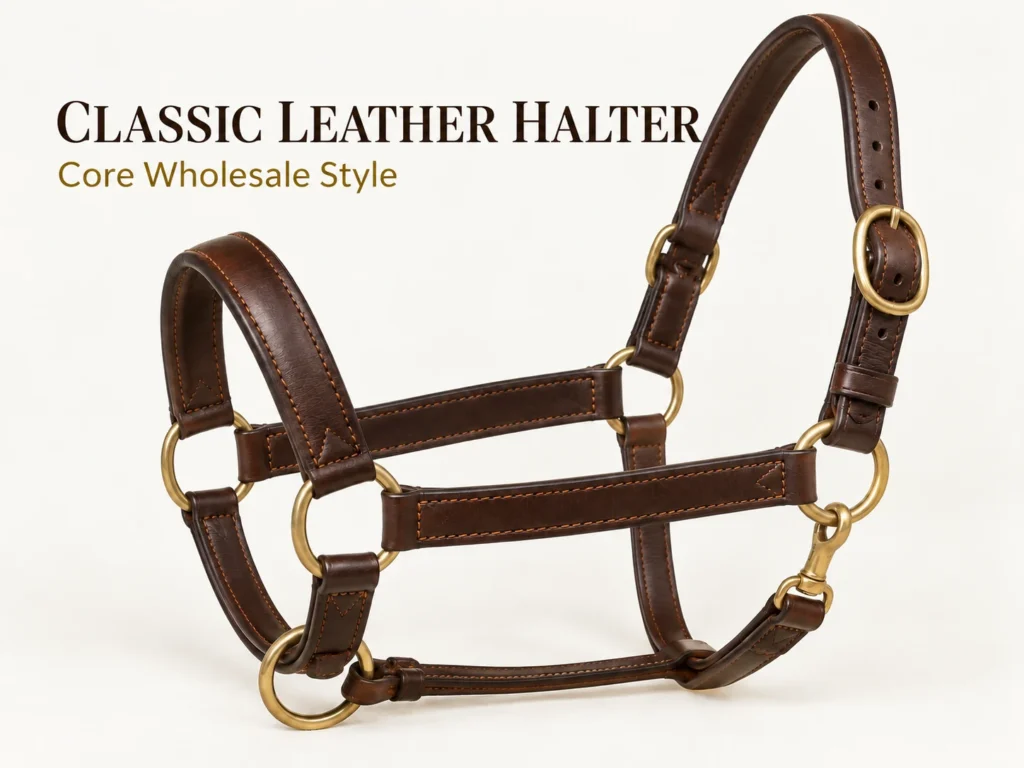
Build a size chart from measured points
“Pony,” “cob” and “full” are useful shopping labels, but they are not universal measurements. A buyer should provide a technical size chart for each design, especially if the range will be sold in several countries or restocked later.
On a labelled drawing, define the finished measurement method for the noseband, cheekpieces, crownpiece and throatlatch. State whether a dimension is measured flat, along the strap, from hardware centre to hardware centre, or around an assembled adjustment setting. Mark the shortest and longest usable adjustment for buckle straps and the spacing between holes. A label such as “full” should map to those actual finished dimensions.
A practical grading sheet might include three columns for pony, cob and full, with a fourth custom option if required. Use buyer-approved numbers, rather than borrowing an arbitrary chart from another brand. Record strap widths and hardware sizes separately: scaling every component by the same percentage can produce an awkward result. Check that adjustment remains usable across the specified range and that left and right cheekpieces are balanced.
When the sample is available, measure it at the same points used in the drawing. Then have a knowledgeable handler check the article on an appropriate horse for the intended size. A flat measurement is necessary for repeatability; it does not establish fit or safety for every individual horse.
Specify the leather and finish
Leather quality is easier to compare when the request describes more than colour. Specify the required leather type and finish, approximate strap thickness where relevant, visible grain, flexibility, edge treatment and stitching. HideOrax’s product page identifies selected full-grain leather as the primary material for its bridle and halter program. Ask what the proposed sample actually uses and keep that approved material reference with the order.
A dark brown sample and a later bulk run can differ in shade because leather is a natural material and finishes vary. If tight colour matching matters, send a physical swatch and agree an acceptable range under consistent light. Check the reverse side and cut edges as well as the outer face. Review whether folded or padded areas retain a clean finish when the straps move.
Do not use “waterproof,” “hypoallergenic” or other technical claims unless they have been verified for the finished product. Give customers care instructions suited to the actual leather, padding, metal finish and any decorative materials approved for that design.
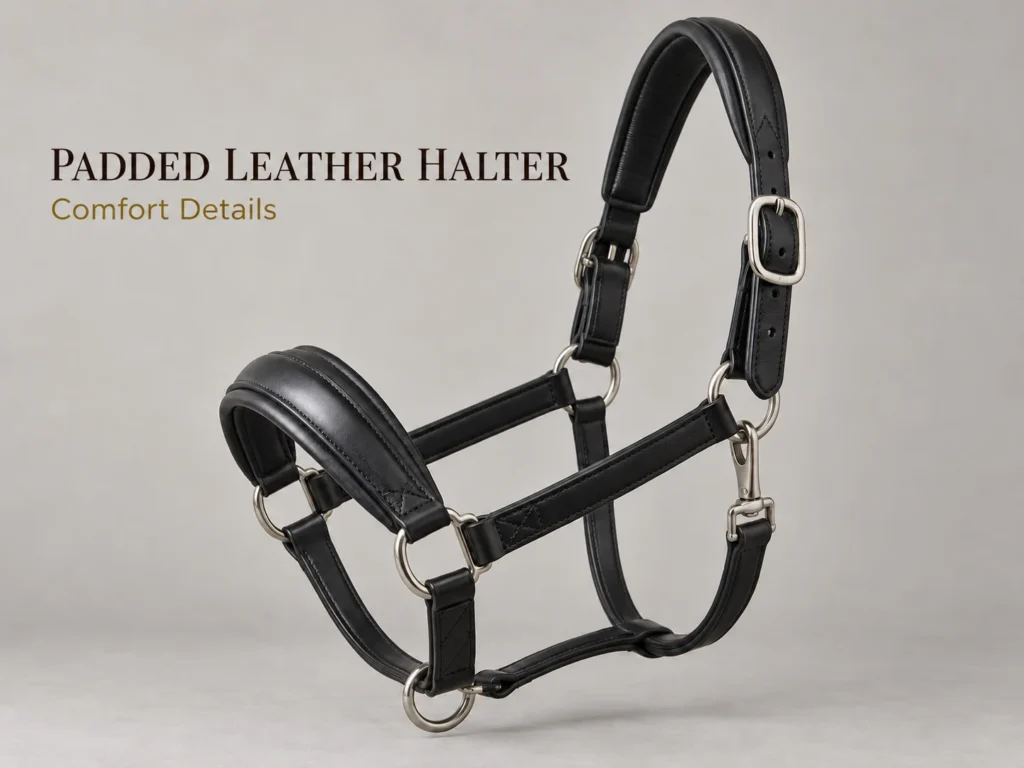
Inspect padding, stitching and contact areas
Padding can distinguish a higher-priced style, but “padded” alone leaves important questions open. State which parts receive padding, the finished width and thickness, the covering material and how the edges meet the leather straps. Examine the sample from the underside for exposed stitching, uneven seams and bulky transitions.
For any style, inspect stitch lines near buckles, rings and folded sections. Ask the supplier to document construction details that matter to your range, such as stitch placement and edge finish, then compare the approved sample with the bulk inspection reference. Look at the entire item assembled: good individual components can still sit unevenly when connected.
Decorative braiding or raised leather changes the surface and thickness. Approve a close-up of the finished detail and its position on the assembled product. Keep branding away from critical adjustment markings or areas where it would make the label hard to read.
Treat hardware as its own specification
“Brass hardware” is too broad for a repeatable purchase order. List each buckle, ring, snap or plate by position and specify its dimensions, finish, colour and attachment method. HideOrax lists brass, antique brass and nickel-look finishes on its product page. Confirm the metal specification and any market-specific testing requirement for the exact hardware you order.
Move every buckle through the approved adjustment range. Check the alignment of punched holes, whether the tongue seats properly, and whether rings can rotate as intended without trapping leather. Inspect edges for burrs and compare metal colour across all pieces in a set. If you need a matching lead strap, define its length, width, attachment and finish separately rather than assuming “matching” covers those details.
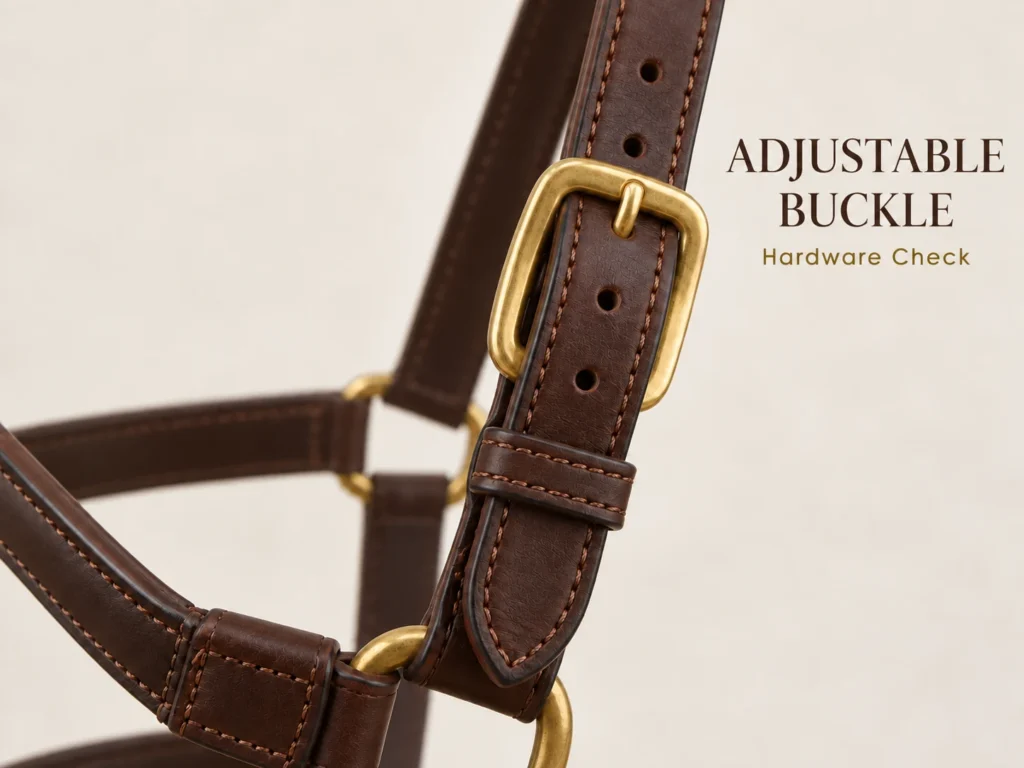
Plan the private label presentation
A private label halter can use embossed leather, a branded label, approved packaging or an agreed nameplate design. HideOrax describes logo embossing, branded labels and coordinated reins and packaging as possible options. Its private label manufacturing page sets out a review, quote, sample and bulk workflow.
Send a vector logo, a placement drawing and the required finish. Ask for a real sample of embossing or a plate before bulk production: an attractive digital mockup cannot show the final depth, size or alignment on leather. If you need retail labels, specify the printed product name, size, colour, barcode location, country of origin wording and care information appropriate to your market. Have your own import and labeling requirements checked before approving the packaging artwork.
A coordinated collection can pair a halter with horse reins or another tack product. Define the leather and hardware colour references for each product separately. A “matching” set needs physical colour approval, since different materials and finishes may appear different in photographs.
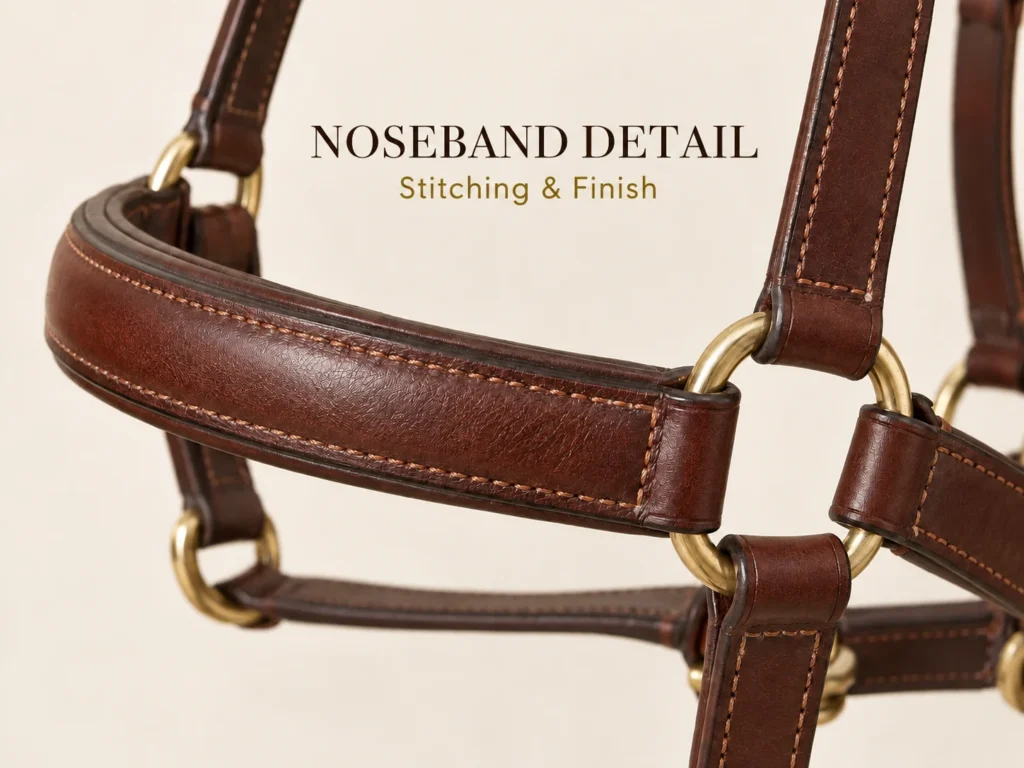
Sample approval before a wholesale order
HideOrax’s bridles and halters page currently states a 10-piece standard MOQ, an estimated 5–7 working days for a sample after specification confirmation, and 15–25 working days for bulk after sample approval. Confirm which variants count toward the minimum and the current timeline in your quotation.
Use a dated approval sheet for the sample:
- Identity: Photograph the complete assembled product from the front, both sides and underside. Assign a style and revision number.
- Dimensions: Check each measured point, adjustment range, hole spacing and strap width against the size chart.
- Materials: Compare leather, padding and colour with the approved swatches.
- Construction: Inspect stitching, folded sections, edges, symmetry and connections.
- Hardware: Operate buckles and rings and compare dimensions and finish.
- Branding: Verify embossing, labels, nameplate and packaging artwork.
- Practical evaluation: Review the intended use and fit with an appropriate horse and knowledgeable handler before making broad product claims.
If anything changes, update the specification and ask for revised approval evidence. A final signed-off sample and measurements give the supplier a clear reference for bulk inspection and later repeat orders.

Send an RFQ that can be priced accurately
A wholesale quote becomes useful when each variation is visible. Include:
- Product reference or photographs, style direction and target market.
- Pony, cob, full or custom sizes with a measured grading sheet.
- Leather type, colour, strap widths, thickness requirements and edge finish.
- Padding, stitching, braid or raised details, if requested.
- Buckles, rings, clips, nameplates and their finish by position.
- Logo file, placement, labels and packaging requirements.
- Quantity per style, size, colour and branded version.
- Sample quantity, approval process, delivery destination and desired shipping terms.
Ask for sample cost, bulk price by variation, packaging cost, setup charges if any, current lead times and agreed quality reference. The HideOrax quote form asks for product, quantity, country and customization details; use its additional details field for the essentials and offer your full specification for follow-up.
Frequently asked questions
Is a horse halter the same as a headcollar?
The terms often refer to the same handling item in different markets. Use the name your audience recognizes, and specify the actual construction and measurements. A bridle is a separate product.
What sizes does HideOrax offer?
Its bridles and halters page lists pony, cob, full and custom sizing. Final dimensions should be agreed in the buyer specification and checked on an approved sample.
Can the halter have padding or a nameplate?
The product page lists optional padding and nameplates for leather halters and headcollars. Provide the exact placement, dimensions and finish you want, then confirm feasibility and price.
What is the minimum order?
HideOrax currently publishes a standard minimum of 10 pieces for bridles, halters and other tack. Ask whether mixed sizes, colours or branding versions can be included in that minimum.
Can I order matching tack under my brand?
The site describes coordinated bridle, halter and rein sets with logo and packaging options. Approve physical material and hardware references across the items so the range is consistent.
Start with a clear specification
A successful halter range begins with measured sizes, an approved material and a working sample. Choose one or two styles, define each variation, and keep a versioned approval record for production and reorders. When your brief is ready, request a wholesale quote from HideOrax and include your target quantities and destination.