
A leather saddle collects dust, sweat and contact marks through normal riding. Left in place, dirt can work into the surface and high-contact areas. Cleaning helps you see the condition of the saddle, while appropriate leather care and storage help maintain its finish.
The routine does not need to be complicated. Remove surface dirt, clean with a product suitable for the leather, apply care products only as the saddle maker recommends, and inspect the parts that take load. The material and finish of your particular saddle matter more than a universal cleaning schedule.
This guide explains a practical routine for riders and riding schools. Tack retailers can also use it to answer common customer questions and prepare clear care information for their saddle ranges.
What do you need to clean a leather saddle?
Gather a few basic items before starting:
- A clean, soft cloth or sponge
- A second dry cloth
- A leather cleaner or saddle soap approved for your saddle’s finish
- A suitable leather conditioner or dressing, if recommended by the saddle maker
- A stable saddle stand with appropriate support
- A small, soft brush for loose dirt in accessible areas, if needed
Read the instructions on both the saddle and the care products. Test an unfamiliar product on a small, less visible area first, especially if the leather has a delicate finish or a color you do not want to darken.
A damp cloth should be damp, not dripping. Do not assume that a product suitable for smooth finished leather is also suitable for suede, roughout, unfinished leather or synthetic components. Bates Saddles, for example, specifically notes that care products can alter the appearance of roughout leather. batessaddles.com
A simple leather saddle cleaning routine
Step 1: Put the saddle on a secure stand
Choose a clean area with enough light to see the seat, flaps, billets and underside. A suitable stand keeps the saddle steady and supports it while you work.
Remove the saddle pad. If stirrup leathers or other removable accessories make cleaning difficult, take them off according to the saddle’s design. Keep the pieces together so they can be checked before reassembly.
Step 2: Remove loose dirt
Use a soft, dry cloth to lift dust and loose grit. Pay attention to folds and places where the rider’s leg, stirrup leathers or girth make contact.
Wiping away grit before using a damp sponge helps prevent rubbing it across the leather. Also check the underside and panel surfaces for dirt that may have come from the saddle pad.
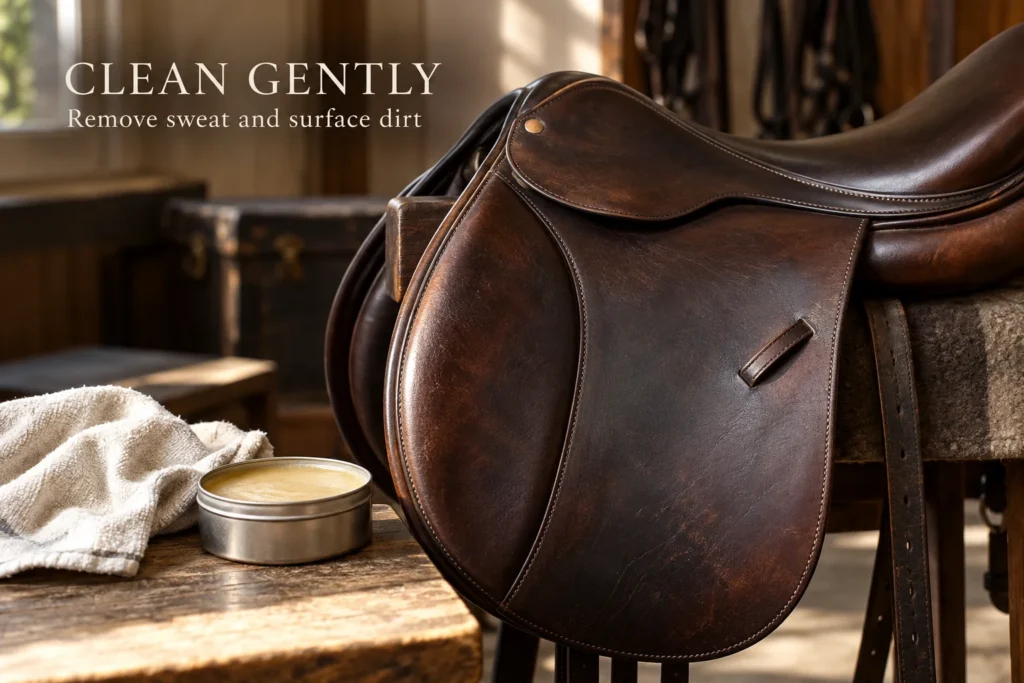
Step 3: Clean the leather gently
Apply the approved cleaner according to its directions. Work in small sections with a damp cloth or sponge, using light pressure. Give particular attention to sweat and grime around flaps, billets and high-contact areas.
Avoid saturating seams, padding or the saddle’s internal structure. Remove excess cleaner as directed by the product instructions, then allow the surface to dry naturally before deciding whether it needs conditioning.
Published leather saddle-care guidance commonly recommends regular cleaning with a damp cloth and suitable saddle soap; the correct product and follow-up treatment still depend on the saddle’s leather and finish. batessaddles.com
Step 4: Check the details while the saddle is clean
A clean surface makes wear easier to spot. Look at stitching, edges, billets, attachment points and hardware. Compare the left and right sides for changes you may not have noticed during riding.
If a loaded strap is cracked, a seam has opened, hardware is loose or the saddle’s structure appears damaged, stop using it until a qualified saddler or other appropriate professional has assessed it. Conditioner cannot repair a structural defect. Regular condition checks are a separate part of saddle care, not a replacement for cleaning. batessaddles.com
How often should you clean a leather saddle?
There is no useful single timetable for every saddle. A horse ridden daily in warm weather, a riding-school saddle shared by several riders and a saddle used occasionally will collect dirt at different rates.
Use this practical approach:
| When | What to do |
|---|---|
| After a ride | Check for sweat, mud and visible dirt; wipe affected surfaces as appropriate and let damp areas dry naturally. |
| When grime builds up | Clean more thoroughly with a suitable leather cleaner, following its directions. |
| At regular intervals | Inspect stitching, billets, hardware, panels and other wear areas; assess whether the leather needs the care product recommended for it. |
| Before longer storage | Clean the saddle, allow it to dry fully, inspect it and store it with suitable support. |
The condition of the leather is a better guide than applying a large amount of product every week. If it feels unusually stiff, looks dry or changes appearance, consult its care instructions or ask a knowledgeable saddler before adding more dressing.
Should you condition a leather saddle?
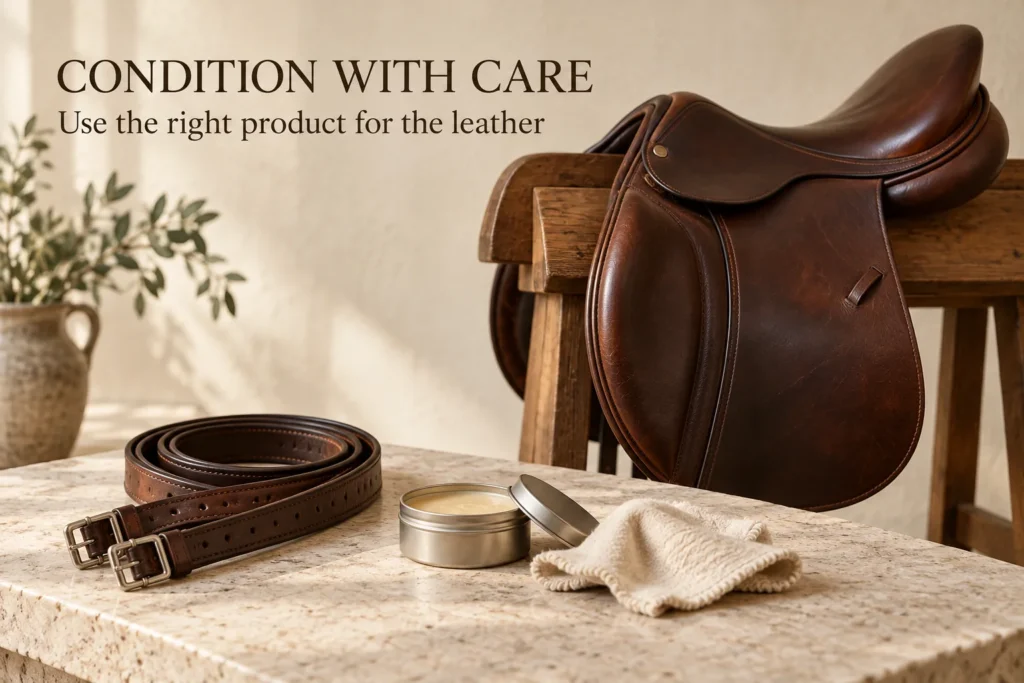
Many finished leather saddles benefit from an appropriate dressing or conditioner, but more product is not automatically better. The right choice depends on the leather, finish and saddle maker’s instructions.
Apply a suitable product sparingly and evenly where directed. Follow its absorption and buffing instructions. Keep excess product away from areas where it could leave the riding surface slippery or affect another material. If you are unsure how a dressing will change the color, test it first.
Do not assume household oil is a substitute for the recommended leather treatment. Some saddle makers advise against oil for their saddles and recommend a different type of dressing. That is a product-specific instruction, so check the guidance for the saddle you own. batessaddles.com
Check straps separately
Stirrup leathers, billets and other loaded leather components deserve their own inspection. Flex them gently and look for cracking, damaged holes, unusual stretching, loose stitches and wear near buckles or attachment points.
Keep a pair of stirrup leathers together when comparing length and condition. If either piece is damaged, ask a qualified professional whether it needs repair or replacement before riding.
What if the saddle gets wet?
If rain or cleaning leaves the saddle damp, wipe away surface water with a soft cloth and allow it to dry naturally in a ventilated place. Check that the pad and accessories are dry before putting them back together.
Avoid trying to speed up drying with a heater, radiator or intense direct sun. Once dry, check the finish and follow the saddle maker’s care instructions. If water exposure has changed the shape, feel or condition of the saddle, have it assessed.
A wet saddle should not be shut inside a non-breathable cover or packed into a closed carton for storage.
How to store a leather saddle properly
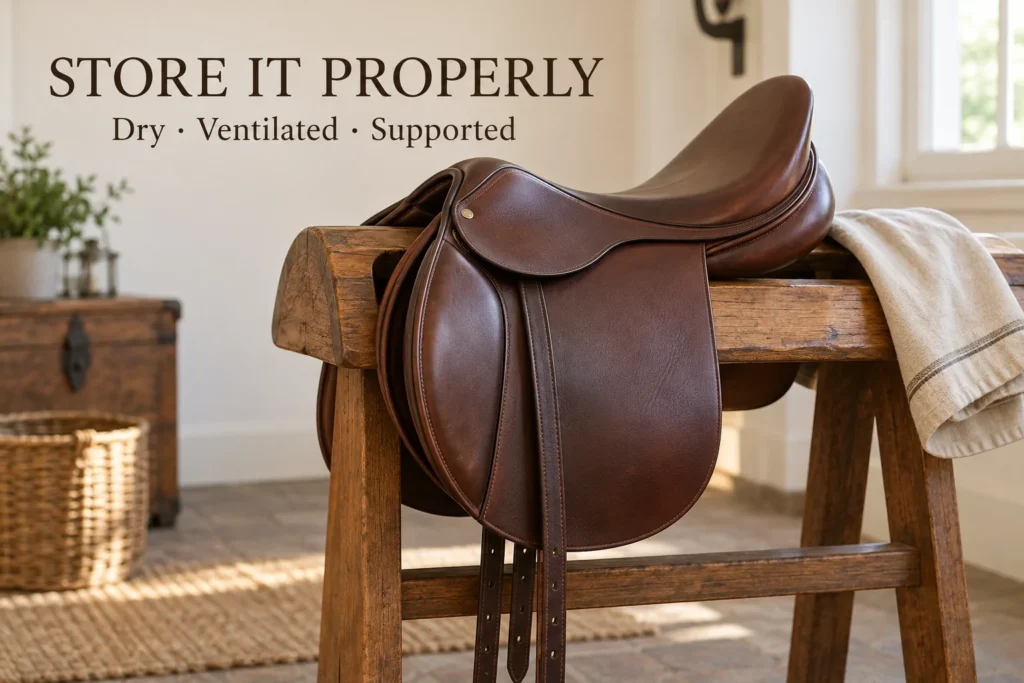
Place the saddle on a suitable rack that supports it without putting uneven pressure on the panels. Choose a dry, ventilated space and keep it away from prolonged heat and direct sunlight. A breathable dust cover can help protect a dry saddle from settling dust.
Do not stack heavy items on the seat or panels. Check stored tack periodically rather than assuming it will stay in the same condition indefinitely. Saddle-care guidance also emphasizes dry, ventilated storage and support that avoids panel indentations. batessaddles.com
Does this advice apply to synthetic saddles?
The basic habits—removing dirt, checking wear and storing the saddle properly—still matter. The leather cleaning and conditioning steps do not automatically apply to synthetic materials.
Synthetic surfaces can require different cleaners, and leather oil or conditioner may be unsuitable. Follow the instructions for the actual model. For example, one synthetic saddle maker recommends diluted mild detergent and water for its own products, followed by drying out of direct sunlight. That guidance should not be copied without checking the construction of a different saddle. wintec-saddles.com
For a closer comparison of materials and buying considerations, read HideOrax’s leather versus synthetic saddles guide. HideOrax also has separate leather English saddle, Western saddle and synthetic saddle ranges.
Common leather saddle care mistakes
Using one product on every surface. Smooth finished leather, roughout, textiles and synthetic panels may respond differently. Identify the material before cleaning it.
Using too much water. A damp cloth can help clean the surface; soaking the saddle may affect areas that cannot dry quickly.
Adding conditioner to cover damage. Dry-looking leather may need appropriate care, but cracking straps or failing stitches need assessment.
Putting a damp saddle into storage. Allow the saddle and its accessories to dry before covering or packing them.
Cleaning the visible seat while ignoring loaded parts. Include billets, stirrup-related components and hardware in regular condition checks.
Assuming cleaning fixes poor fit. A clean, well-maintained saddle can still be unsuitable for a particular horse and rider. Seek qualified fitting advice when the horse changes shape, the saddle moves differently or comfort becomes a concern.
A care guide is useful for tack retailers, too
If you sell saddles in the US, UK or Europe, clear after-sale care information helps customers use the right products and recognize when professional attention is needed.
A useful care card should identify the actual outer materials, recommend compatible cleaning products, explain storage and describe the parts customers should inspect. Avoid printing the same leather-care instructions for both leather and synthetic models.
Private-label buyers can agree on product labels, care information and packaging during sampling. HideOrax’s private-label equestrian manufacturing program covers buyer-approved specifications and packaging. Its full equestrian catalog also includes related tack, such as bridles, reins, girths, pads and saddle accessories that may need their own care instructions.
Frequently asked questions
Can I clean a leather saddle with water?
Use a damp cloth where the saddle and cleaning-product instructions allow it. Avoid soaking the saddle or leaving moisture in seams and padded areas.
Is saddle soap enough on its own?
That depends on the leather and the maker’s instructions. Some finished leather saddle care systems include a suitable dressing after cleaning. Check the guidance for your saddle before choosing a product.
Should I oil a new leather saddle?
Do not assume it needs oil. Follow the saddle maker’s instructions for its particular leather and finish; some manufacturers specifically recommend another dressing instead of oil. batessaddles.com
Can conditioner fix a cracked billet?
No. A cracked or weakened loaded strap needs assessment and possibly repair or replacement by a qualified professional. Do not rely on a care product to make damaged tack safe to use.
Do I need to clean the saddle if I use a saddle pad?
Yes. A pad helps separate the saddle from the horse, but dirt and sweat can still reach tack surfaces. Clean the pad according to its own materials and check both the pad and saddle after use. HideOrax offers saddle pads for wholesale collections.
Keep the routine simple and consistent
A good leather saddle care habit has four parts: remove dirt, clean according to the material, inspect for wear and store the dry saddle with proper support. Use the instructions for your particular saddle when choosing products and ask a qualified professional to assess damage or fit concerns.
For equestrian retailers and brands developing a saddle range, accurate care information should begin with the approved materials and sample. Explore HideOrax’s wholesale saddle and tack products or request a quotation with your intended models, materials, quantities and labeling requirements.