
Reins are a direct point of contact between a rider and a horse. For a wholesale buyer, that makes seemingly small choices—strap width, grip texture, connector hardware and finished length—part of the product’s usefulness, not just its appearance.
HideOrax lists plain leather, rubber-grip and braided horse reins for trade buyers. Length, width, grip, fittings, color, stitching and branding can be developed to an approved specification. This guide explains how to turn those options into a clear product brief for tack shops, importers and private-label brands serving the USA, UK and Europe.
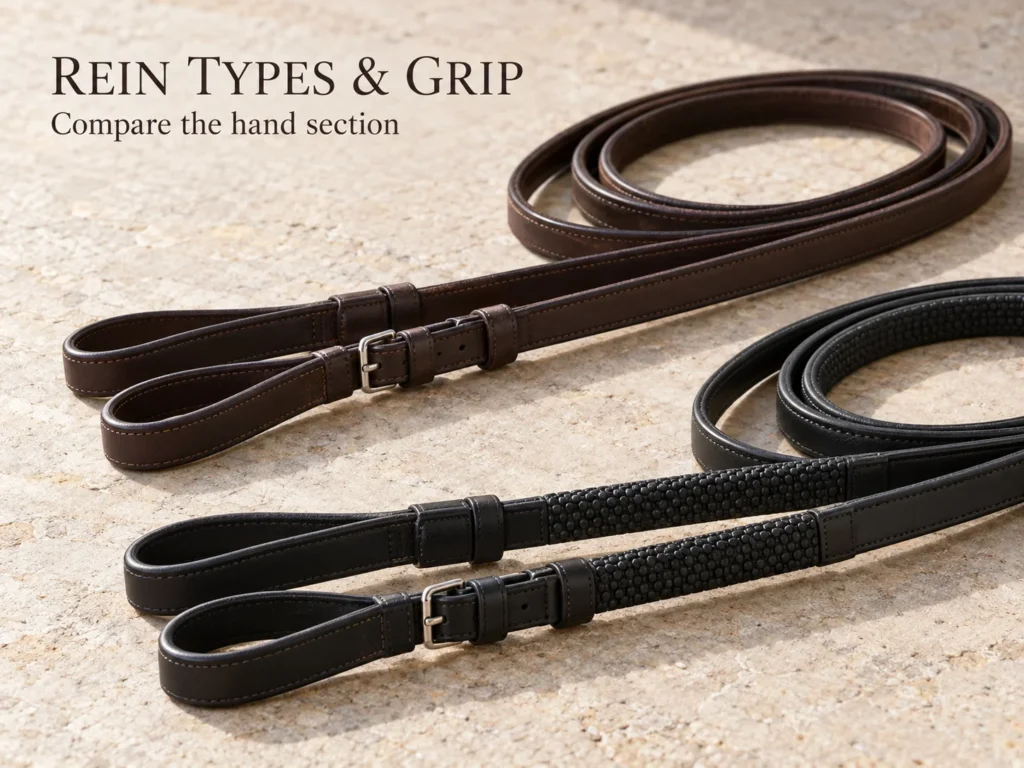
Choose the rein construction for the rider and the range
Do not begin with “brown leather reins” alone. Start with the intended riding discipline, customer and matching bridle.
| Construction | Typical buying reason | Sample decision to confirm |
|---|---|---|
| Plain leather | A clean, traditional appearance and straightforward leather range | Width, leather feel, edge finish, stitching and reinforcement at the ends |
| Rubber-grip | A defined textured grip section | Grip material, pattern, length, attachment and how it feels in wet and dry hands |
| Braided leather | A distinct visual style for a coordinated tack collection | Braid pattern, consistency, thickness, flexibility and the transition to the connector |
These are HideOrax’s listed product families. A retailer should evaluate the final sample for its intended use. If you plan to make a measurable grip or safety claim, obtain evidence for that exact product.
Specify the measurement method, not only a size name
“Full-size reins” can mean different things to different brands. A usable technical sheet shows where measurement begins and ends. Specify whether length is measured along one finished rein from the bit attachment to the joining buckle, as a complete pair, or in another clearly drawn way. State the unit, the strap’s finished width at several points and any narrower section near the bit.
For a US listing, inches may be the most familiar display unit. A European product sheet may also show centimetres. Keep a single master specification and convert the second unit consistently. For example, 60 inches is 152.4 cm; it is only a conversion example, not a recommended rein length. The endpoints and the definition of one rein versus a joined pair matter more than a rounded number.
Ask the sample maker for an annotated photograph showing:
- The measurement path and both endpoints.
- The finished width and thickness at the hand section.
- Grip-section length, if present.
- The distance from the connector to the first stitching or braid transition.
- The total length of each side and the permitted difference between them.
Make a size chart from approved physical samples rather than copying another brand’s “pony,” “cob” or “full” labels. If several lengths are offered, name each variation and give its actual measured dimensions.
Check how the reins connect to the bridle
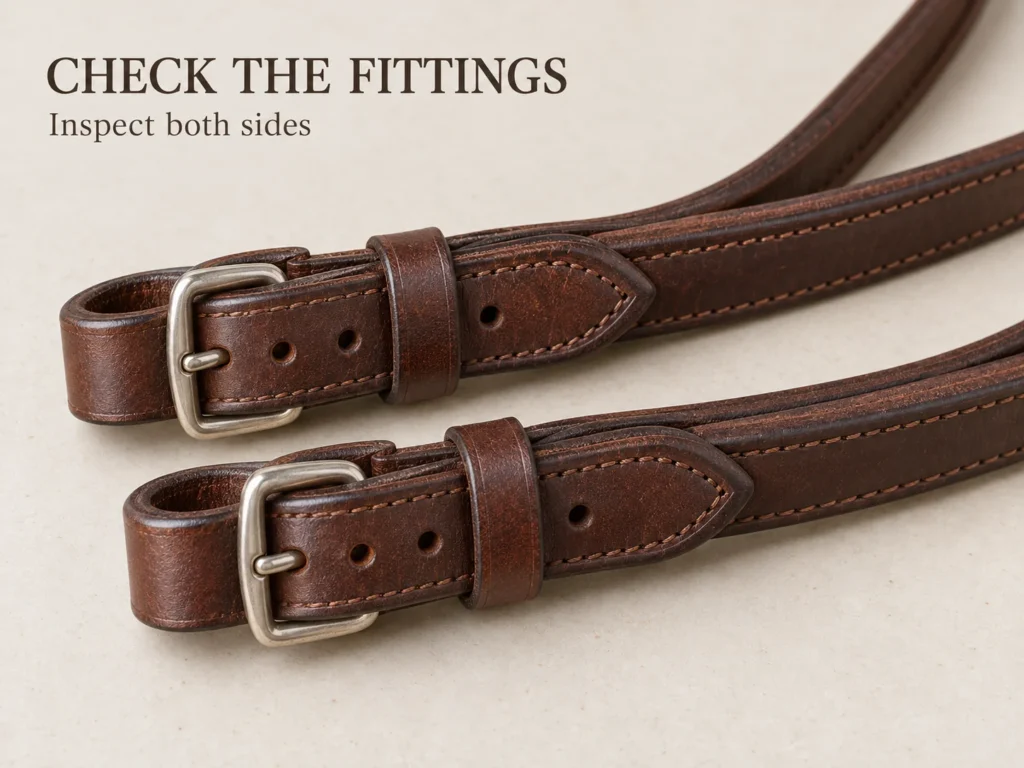
The connection at the bit deserves a separate line on the purchase order. HideOrax lists buckle, hook or stud fittings as configurable options. Agree on the fitting style, material and finish, attachment method and the intended bridle or bit connection. A photograph of both sides of the approved fitting helps prevent a visually similar but functionally different substitution.
Inspect the connection for clean edges, secure stitching or fastening, smooth operation and sufficient clearance for the intended setup. A rein that looks attractive on a table still needs a practical trial with its intended bridle or headstall.
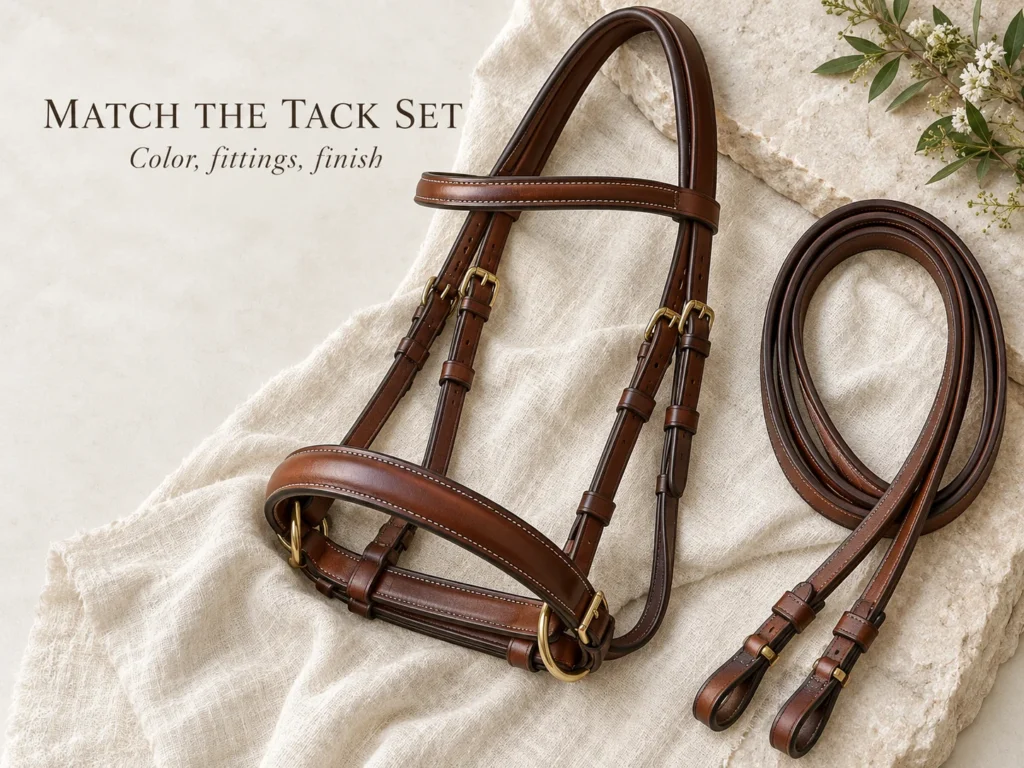
For a matching collection, specify the same leather shade, hardware finish and stitch color across reins and bridles. If the bridle has contrasting padding, decide whether the reins should match the main leather or the accent. Photograph the two products together under neutral light before approving bulk color.
Inspect the grip and construction in the hand
A catalogue image cannot tell a buyer how the rein behaves when held. Compare approved samples by handling them with clean, dry hands and, where appropriate, in realistic riding conditions. Record the observations in a sample approval form.
For plain leather, check surface feel, leather grain, flexibility, thickness, edge treatment and whether the two sides feel alike. A full-grain leather description should refer to the agreed material actually used in the finished sample.
For rubber-grip, check the grip’s position, length, texture, attachment and transition to the leather. Make sure the pair has the same grip pattern and placement. A buyer may prefer a pronounced pattern for one product line and a subtler texture for another; the approved sample should define it.
For braided reins, inspect the braid at the start, middle and end. Look for consistent spacing and thickness, protruding ends, loose sections and uneven transitions. The final braid should feel suitable for the target customer as well as look consistent in a photograph.
Compare both sides together: length, width, connector orientation, stitching, leather color and finish should be assessed as one retail unit. Agree on numerical tolerances where measurements matter. “Same as sample” is useful when the sample and its written specification remain identifiable.
Plan listings for the USA, UK and Europe
Regional targeting starts with customer language and transparent dimensions. US buyers may search for “horse reins” and measure in inches. UK buyers may use “reins” alongside pony, cob and full bridle sizing. Continental European retailers may require a local-language listing and centimetres. Validate the terms against your own market and product.
| Listing element | Practical approach |
|---|---|
| Product name | State construction first: plain leather, rubber-grip or braided |
| Size | Give the actual length, measurement endpoints and width; show inches and centimetres when useful |
| Unit sold | Clarify whether the pack contains one pair or another configuration |
| Attachment | Name the exact buckle, hook or stud system shown in photos |
| Materials | List the approved leather, grip and hardware specifications accurately |
| Care | Supply instructions appropriate to the final material combination and destination language |
Before making a specific compliance claim, check the finished item and requirements for the destination market. Review importer labeling, product documentation and applicable customer information with the buyer before production.
Build a private-label rein line
Private labeling can include logo application, labels and packaging, according to HideOrax’s OEM and private-label service. The important task is to make repeat orders predictable.
Give each approved configuration a code that identifies style, leather color, grip, length and fittings. Keep a dated record of the physical sample, color swatches, connector photographs and final packaging. For the initial order, choose a focused range that corresponds to the bridles you already sell.
Agree on logo position and size in a sample. Branding must not obstruct adjustment or make the hand section uncomfortable. Specify whether the retail label, barcode, origin marking and care information appear on a hangtag, band or bag. Inspect the packed sample as carefully as the rein.
Approve the sample before placing the bulk order
HideOrax’s horse reins manufacturer page lists a standard MOQ of 10 pieces, sample lead time of 5–7 working days after specification confirmation and bulk lead time of 15–25 working days after sample approval. Confirm how “piece” applies to the quoted retail unit, and confirm current timing and quantities for your design and variation mix.
Use the sample review to check dimensions, consistency between the two sides, grip feel, connector operation, bridle compatibility, color, branding and packaging. Photograph the approved unit against a ruler and keep it as the reference for production. If a change is requested after approval, issue a new version of the specification.
Before shipment, agree on inspection quantities and acceptance criteria. Ask for photographs that show the features you specified, including measurements and packed units.
Rein quotation checklist
To receive a useful quotation, send:
- Target market, sales channel and intended riding use.
- Plain leather, rubber-grip or braided construction, plus reference images.
- One-rein or pair measurement definition; lengths, widths and expected tolerances.
- Leather color and finish, grip pattern and stitch color.
- Bit attachment and center joining method, with hardware material and finish.
- Matching bridle model or sample if relevant.
- Logo, labels, care information, barcode and packaging requirements.
- Quantity per style, size and color, destination and requested sample schedule.
If you are comparing suppliers, send each the same specification and compare what the price includes: sample, fittings, packaging, inspection and shipping basis.
Frequently asked questions
What types of horse reins does HideOrax list?
The current product page lists plain leather, rubber-grip and braided reins. Final dimensions, material and fittings are agreed from the buyer’s approved specification.
Can reins be made to match a bridle?
HideOrax says leather color, hardware and stitching can be coordinated with an approved bridle program. Check the connection and color match using physical samples.
How should I display rein length in US and European listings?
Show the same approved measurement in inches and centimetres where it helps customers, with a diagram defining the endpoints and whether the number refers to one side or the whole pair.
Can I add my own label?
Yes, the product page lists logo, label and packaging options. Confirm placement and appearance on a packed sample before bulk production.
What is the minimum wholesale order?
HideOrax currently states 10 pieces for reins. Confirm the retail unit and whether that minimum applies per model or variation when requesting your quote.
Make the first order easy to inspect and reorder
A strong wholesale rein brief lets a supplier make the same pair again and lets a retailer describe it clearly. Select the intended rider, define measurements and fittings, test a physical pair with the matching bridle and approve the packed unit.
Explore HideOrax’s full equestrian catalogue and request a wholesale quote with your rein specifications, target quantity and destination.